
Will Tech Billionaires Pay Up for Picasso? Pace’s Latest Show Brings the Artist’s Work to Facebook and Google’s Doorstep
Less than two months after
unveiling its brand new global
headquarters in Chelsea, mega-gallery Pace is gearing up for
another first on the opposite side of the country. The gallery is
opening a major career-spanning show of Pablo Picasso (“Seeing
Picasso: Maker of the Modern,” November 2–February 16) at its Palo
Alto branch in the heart of Silicon Valley.
Pace trumpets the show as the
first ever presentation of the artist’s work in the city, and the
first monographic exhibition of his work in the Bay Area in nearly
a decade. It is also the latest big swing in Pace’s ongoing effort
to tap into—or, more accurately, help cultivate—a Silicon Valley
art market.
“We found a place where everyone
said, ‘They have no interest in art,’” the gallery’s president Marc
Glimcher says of what he likes to call “the mid-Peninsula” over
Silicon Valley. “We found the opposite of what everyone told us.
They have an amazing, huge interest in art.”
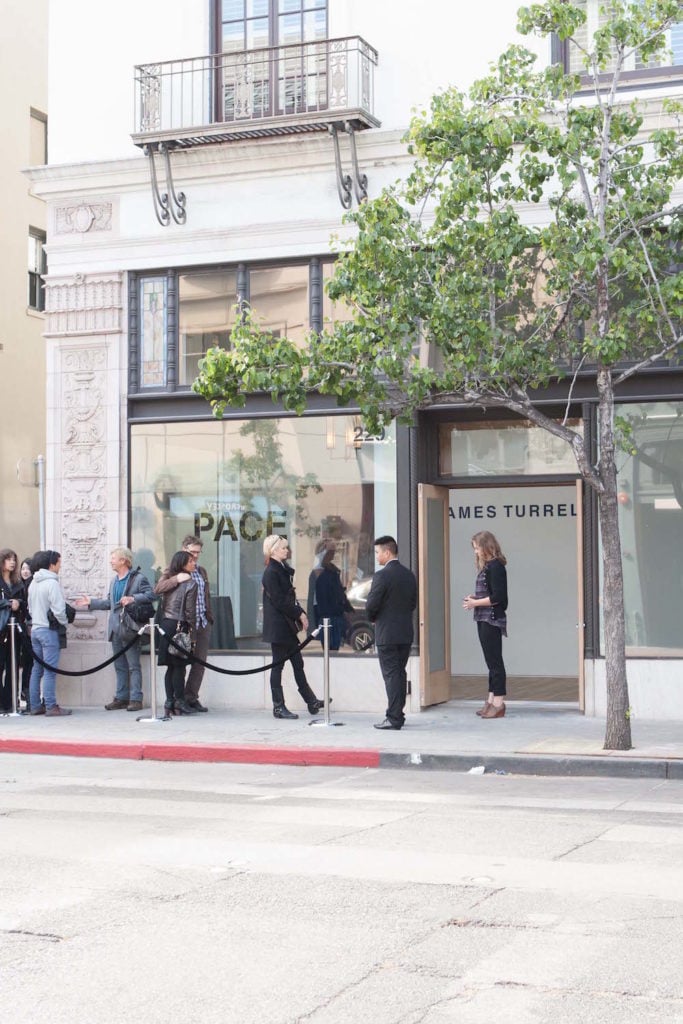
James Turrell opening at Pace’s Palo
Alto location in April 2016. Photo by Drew Altizer Photography.
Since Pace first opened its Palo
Alto branch in 2016, its activities have been closely watched among
those who have struggled to break into a region that’s home to some
of America’s biggest and fastest-growing fortunes. (Although it’s
only had a brick-and-mortar space there for three years, the
gallery is marketing the Picasso exhibition as its fifth
anniversary in the city based on a pop-up space it opened in 2014,
followed by a widely attended TeamLab
presentation at a Tesla dealership in Menlo Park.)
The Picasso show is a costly,
time-consuming effort. Glimcher spent 18 months working on the
project, initially with support from Bernard Ruiz-Picasso, the
artist’s grandson and founder with his wife, Almine Rech, of
Fundación Almine y Bernard Ruiz-Picasso para el Arte, and later in
the process, with Picasso’s granddaughter, Diana Widmaier Picasso.
Both were instrumental in securing important loans, Glimcher
said.
In a strategic nod to both the
local art scene and approachability, Glimcher also secured Stanford
University professor Alexander Nemerov, chair of the art history
department, to create a digital audio-visual tour.

Spanish artist Pablo Picasso (1881–1973)
in front of one of his paintings at home in Cannes. Photo by George
Stroud/Getty Images.
The chronological survey of
Picasso features just over 35 works, including paintings, works on
paper, sculptures, and ceramics that reflect the artist’s major
innovations. Only a handful are for sale; the gallery declined to
disclose prices. Works on view include Le Fou (1905); The Dead Casagemas (1901); Standing Woman (1912); Couple on the Beach (1928); Head of a Woman (1946); and Woman with a Flower (1932).
Picasso is widely known as a
gateway drug for wealthy collectors who aren’t sure where else to
begin. (That’s part of why so many auction houses and galleries
launch their presences in Asia with Picasso presentations.) But not
everyone is confident the approach will play in Silicon
Valley.
“I literally scratched my head
when I got the email blast,” says one collector. “A non-saleable
Picasso show doesn’t make sense. Who is Pace trying to get?
Presumably people they want to engage with who are sub-40 or sub-45
and other major collectors? None of them are buying Picasso.”
Another observer wondered whether this was really the right time
for a high-profile exhibition of Picasso—a dead, white man who few
would deny had a pretty extreme case of misogyny.
But Glimcher is convinced that
tech workers will be entranced by the artist’s role as one of art
history’s chief innovators and rule-breakers. “To me, he was the
artist who redefined what it means to be an artist in the
20th-century; an artist as a revolutionary, a superstar… someone
who has impact all around the world,” Glimcher says. “Where could
possibly be more appropriate to bring that back into focus than a
place where people’s lives are devoted to rethinking how to
think?”
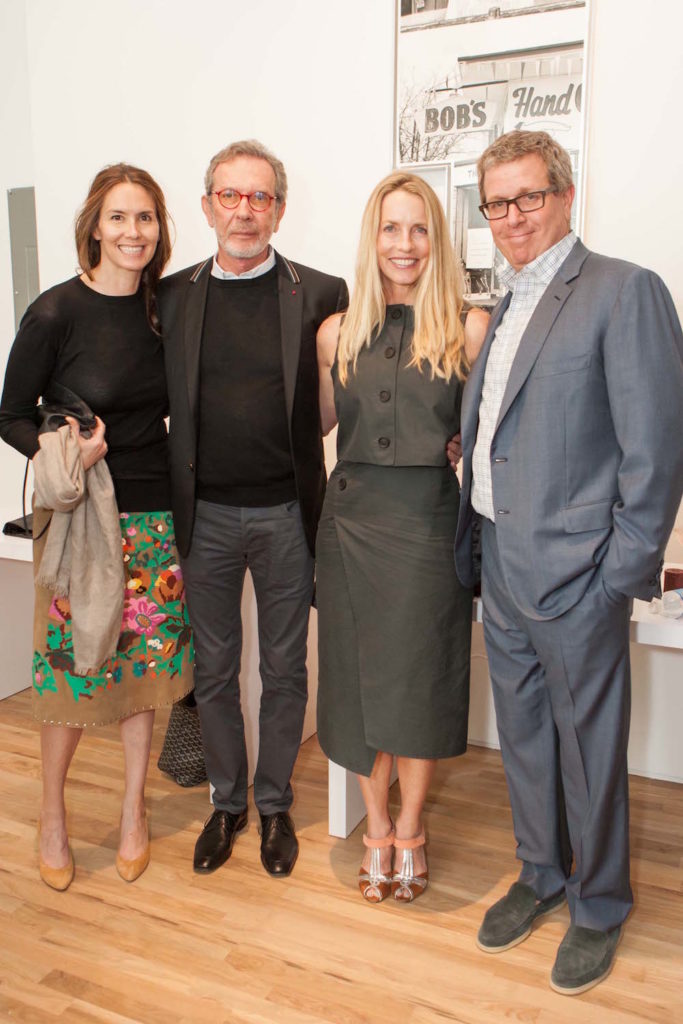
L to R: Laurene Powell Jobs, Arne
Glimcher, Fairfax Dorn, and Marc Glimcher at the opening of Pace
Palo in 2016. Photo by Drew Altizer Photography.
The subject is also personal for
Glimcher: Picasso was the subject of one of his first-ever shows,
organized in connection with dealer Matthew Marks. Glimcher jokes
he was “brainwashed into Picasso at a very young
age.”
The show is also partly a
strategic attempt to appeal to busy potential buyers who have the
spare change to buy art but don’t invest weeks and thousands of
dollars traveling to major art fairs or events around the world.
“There are a lot of people who want the exposure but they don’t
necessarily have the ability to go to every fair and museum opening
or constantly travel to New York and London,” Glimcher says. “This
is an incredibly smart bunch of people who can soak up a lot from
shows we can present there.”
“Seeing Picasso: A Maker of the Modern” is on
view at Pace Palo Alto through February 16, 2020.
The post Will Tech Billionaires Pay Up for Picasso? Pace’s
Latest Show Brings the Artist’s Work to Facebook and Google’s
Doorstep appeared first on artnet News.
Read more https://news.artnet.com/market/pace-picasso-palo-alto-1695225
Further reading


Leave a comment