
The Cultural World Is Ailing. That’s Why 23 Arts Groups Have United to Give $5,000 to 100 Artists Every Week Until September
The coronavirus crisis is
attacking every part of our society and of ourselves: our personal
and public health, our families and schools, our businesses and
communities, our local and global economies.
It’s also attacking the people
who connect us to our humanity: our artists.
Over the past few weeks, as the
COVID-19 pandemic began sweeping across the United States, tens of
thousands of artists have watched their income evaporate
as performance spaces shutter
indefinitely, events are cancelled, and studios and museums are
closed. Simultaneously, for too many artists, their supplemental
streams of income, including second, third, and fourth
jobs—teaching gigs
and conferences, service industry jobs, and
more—have also dried
up. The result is a sudden cliff of precarity.
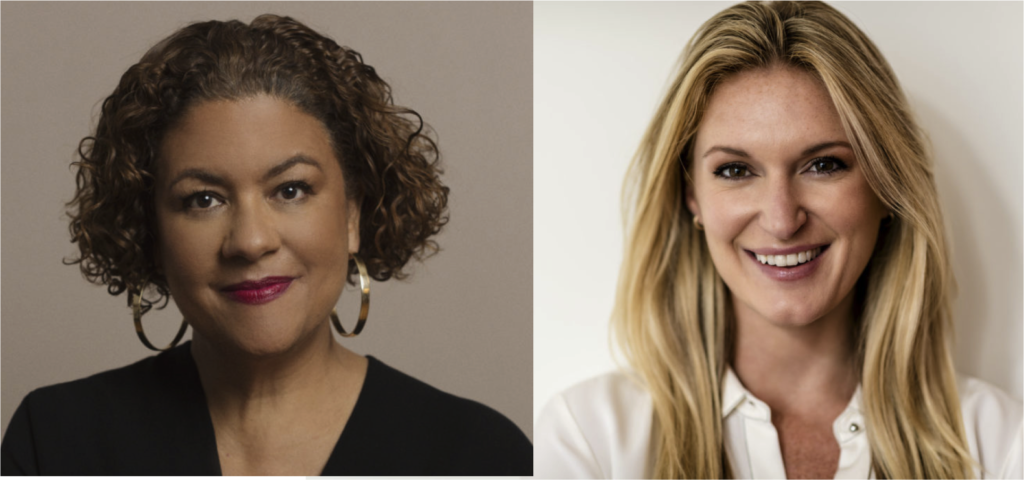
Left, Elizabeth Alexander of the Mellon
Foundation. © Djeneba Aduayom. Right, Sarah Arison of the Arison
Arts Foundation. Photo by Nick Garcia, courtesy of National
YoungArts Foundation.
In turn, philanthropy has
stepped in, developing rapid response funds across the country and
extending grants to organizations that serve communities on the
front lines. And yet, when it comes to the arts, we’ve only focused
on half of the problem. In
these first few weeks, the attention paid to the arts has been
primarily focused on organizations and institutions—not the people
whose work breathes life and energy and inspiration into
them.
No one would deny the role these
cultural institutions play in our society, or how they have been
and will be devastated by this crisis. We must continue to support
them. But more than any one organization, individual artists
themselves are the bedrock of the arts ecosystem in America, and
need our help before they hit rock bottom.
Right now, we must attend to the
individuals—the musicians, playwrights, painters, poets, sculptors,
dancers, filmmakers, novelists, and more—who often operate outside
of institutions. Indeed, for many artists, this independence gives
them the necessary freedom to pursue their vision and creative
practice with integrity.
We have heard from countless
artists who have watched a year of gigs fall like dominoes into the
unknowable future. Book launch tours have been cancelled, keeping
artists from the ability to sell work they may have been developing
for years. Jazz musicians who tour ten months out of the year
struggle to imagine the how and when of being back on the road and
meeting their audiences in intimate spaces. Many visual artists are
not allowed to enter their studios, nor dancers, their rehearsal
spaces. Artists who work collaboratively can no longer do
so.
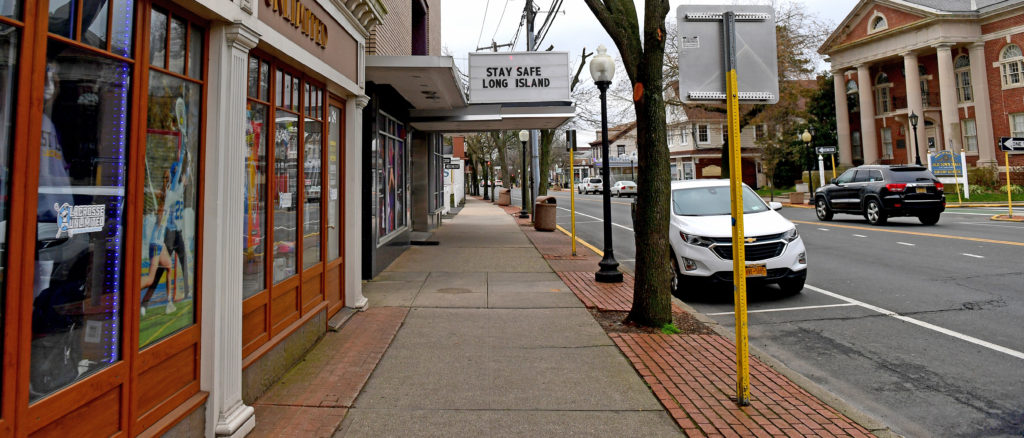
A theater marquee reading “Stay Safe
Long Island” in Babylon, New York on March 19, 2020. (Photo by
Thomas A. Ferrara/Newsday RM via Getty Images)
Many gig-dependent artists tell
us that they cannot pay their rent and are struggling to feed their
families. As with others among us, some will fall ill themselves or
be called into care of others. The resultant lost income is a
present state of emergency for creative communities that, while
unusually hardy, are in this period extremely
fragile.
Some organizations have already
recognized this challenge, and are stepping up to help. For
example, in New York City, Ars Nova cancelled the remainder of its
scheduled theater season while committing to pay all the
artists who had been
scheduled to perform, as well as crew members. Bandcamp recently
made news for waiving its
fees for a day to help
boost the incomes of musicians who use its platform. Others have
put together resources and online trainings to help artists
navigate their new financial reality, including access to
unemployment benefits offered by the government. But we can and
must do even more.
We understand the challenges
artists face in this moment, and also their essential role in any
thriving society. That’s why the Andrew W. Mellon Foundation and
the Arison Arts Foundation have joined with over a dozen arts
funders to create Artist Relief, a $10 million national fund to
support individual artists.
Artist Relief—a coalition
organized by Academy of American Poets, Artadia, Creative Capital,
Foundation for Contemporary Arts, MAP Fund, National YoungArts
Foundation, and United States Artists—will make 100 grants of
$5,000 each to individual artists every week between now and
September. These funds are intended to be used flexibly by the
artists who receive them to meet their most pressing financial
needs and to enable their continued creative
practice.
To be clear: Whether or not
artists produce new work during this crisis is beside the point.
While some have pointed to Shakespeare’s King Lear and other iconic art produced during previous
pandemics as inspiration, our support for them is not conditional
or contingent; it is an investment in the future of these artists
and in our country’s arts ecosystem.
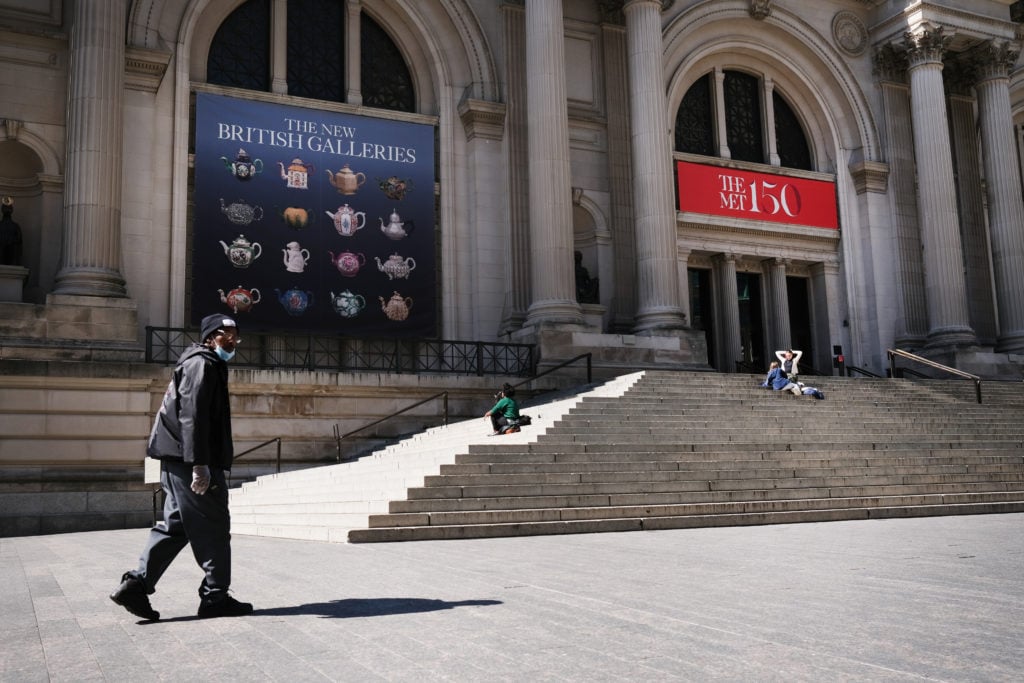
The closed Metropolitan Museum of Art on
April 1, 2020 in New York City. (Photo by Spencer Platt/Getty
Images)
There’s no question that for
decades to come, these artists will be the chroniclers,
interpreters, and illuminators helping us process and understand
the implications of this unique moment in history we are living
together. They will teach us and inspire us, as so many already
have. Shouldn’t we do everything we can to see them through to the
other side, to support them as their work supports us
now?
In dark times, artists do more
than provide light; they create it and sustain it. They help us see
and understand what makes us human in the face of fear and
uncertainty. They give us the words and songs and dances and images
with which to mourn and exalt. Rather than give antidotes or easy
solutions, artists illuminate the path forward and over and through
life’s most challenging moments.
We, of course, don’t have easy
solutions either. The funds we have gathered are not nearly enough
to help every artist in America, but we hope this Artist Relief
Fund will serve as a model and clarion call to others.
As James Baldwin once put it,
“You think your pain and your heartbreak are unprecedented in the
history of the world, but then you read. It was Dostoevsky and
Dickens who taught me the things that tormented me most were the
very things that connected me with all the people who were alive,
or who ever had been alive.” The same could be said of music and
poetry, theater and dance, of visual art and artists of all
kinds—all these gifts we cannot take for granted.
As we turn to art for solace and
strength, let us not forget the people who make that art possible.
We share a responsibility to offer them the same relief and refuge
they offer us all.
Elizabeth Alexander is
President of the Andrew W. Mellon Foundation. Sarah Arison is
President of Arison Arts Foundation and Chair of the Board of the
National YoungArts Foundation.
Artist Relief launches today with a $5 million seed gift
from the Andrew W. Mellon Foundation, to match an initial $5
million from the following foundations: 7|G Foundation, Adolph and
Esther Gottlieb Foundation, Amazon Literary Partnership, The Andy
Warhol Foundation for the Visual Arts, Arison Arts Foundation,
Doris Duke Charitable Foundation, Emily Hall Tremaine Foundation,
Ford Foundation, Helen Frankenthaler Foundation COVID-19 Relief
Effort, Jerome Foundation, Joan Mitchell Foundation, Kraus Family
Foundation, LeRoy Neiman and Janet Byrne Neiman Foundation,
Metabolic Studio, Mike Kelley Foundation for the Arts, Pritzker
Pucker Family Foundation, Richard Salomon Family Foundation, Robert
Rauschenberg Foundation, The Sue Hostetler and Beau Wrigley Family
Foundation, Teiger Foundation, The Wallace Foundation, and The
Willem de Kooning Foundation.
Artists can apply at www.artistrelief.org. Artists demonstrating
the most severe financial need will be prioritized, with an
emphasis on funding widely across disciplines and
geographies.
The post The Cultural World Is Ailing. That’s Why 23 Arts
Groups Have United to Give $5,000 to 100 Artists Every Week Until
September appeared first on artnet News.
Read more https://news.artnet.com/opinion/artist-relief-fund-op-ed-1828242
Further reading


Leave a comment