
A Newly Discovered Painting by Baroque Master Artemisia Gentileschi Will Go on View in London—But Not at Her National Gallery Survey
A
painting of David and Goliath newly hailed by experts as the work
of Artemisia Gentileschi will, alas, not be a late addition to the
National Gallery’s forthcoming first-ever exhibition celebrating
the most famous Italian female artist of the 17th
century.
But a
conservation studio in London is stepping in to show the picture
anyway.
Scholars and the public will be able to see
David and Goliath (around 1639) by appointment in the
studio of Simon Gillespie, who painstakingly removed layer upon
layer of dirt, varnish,
and overpainting to find he artist’s signature, long hidden on
David’s sword.
The
discovery confirmed a long-held argument by the art
historian Gianni Papi
that the work is by Gentileschi. Papi and Gillespie announced their findings in
this month’s edition of the Burlington
Magazine.
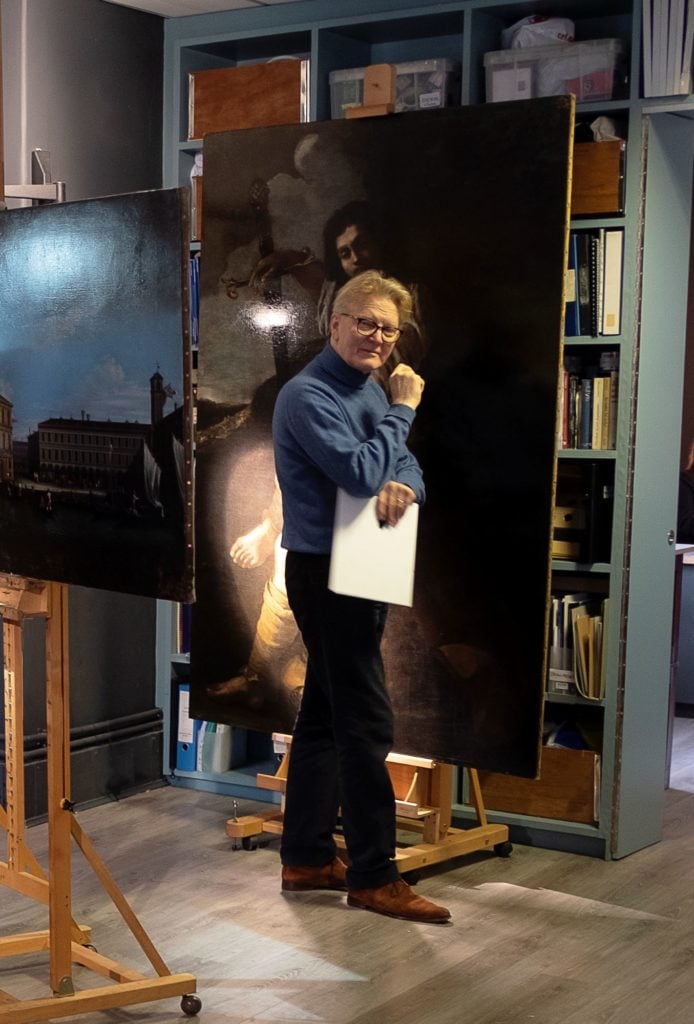
Artemisia Gentileschi’s David and
Goliath in the studio with Simon Gillespie. Image courtesy
Simon Gillespie Studio
Why the Painting Won’t Be at the National
Gallery
The
UK-based owner of the painting, who wishes to remain anonymous, is,
of course, delighted to have the work by Gentileschi,
which he wants to put on long-term loan to an
appropriate art museum.
“I
think it would be wonderful if the right public collection
expressed an interest in placing it on public display, much as we
would also love [for the painting] to be at home for a bit,” he
says.
The
National Gallery began planning its show around 16 months ago,
after it acquired the artist’s Self-Portrait as Saint Catherine of
Alexandria in
2018, a £3.6 million ($4.5 million)
purchase it clinched with remarkable speed, especially
considering the question marks hanging over its
provenance.
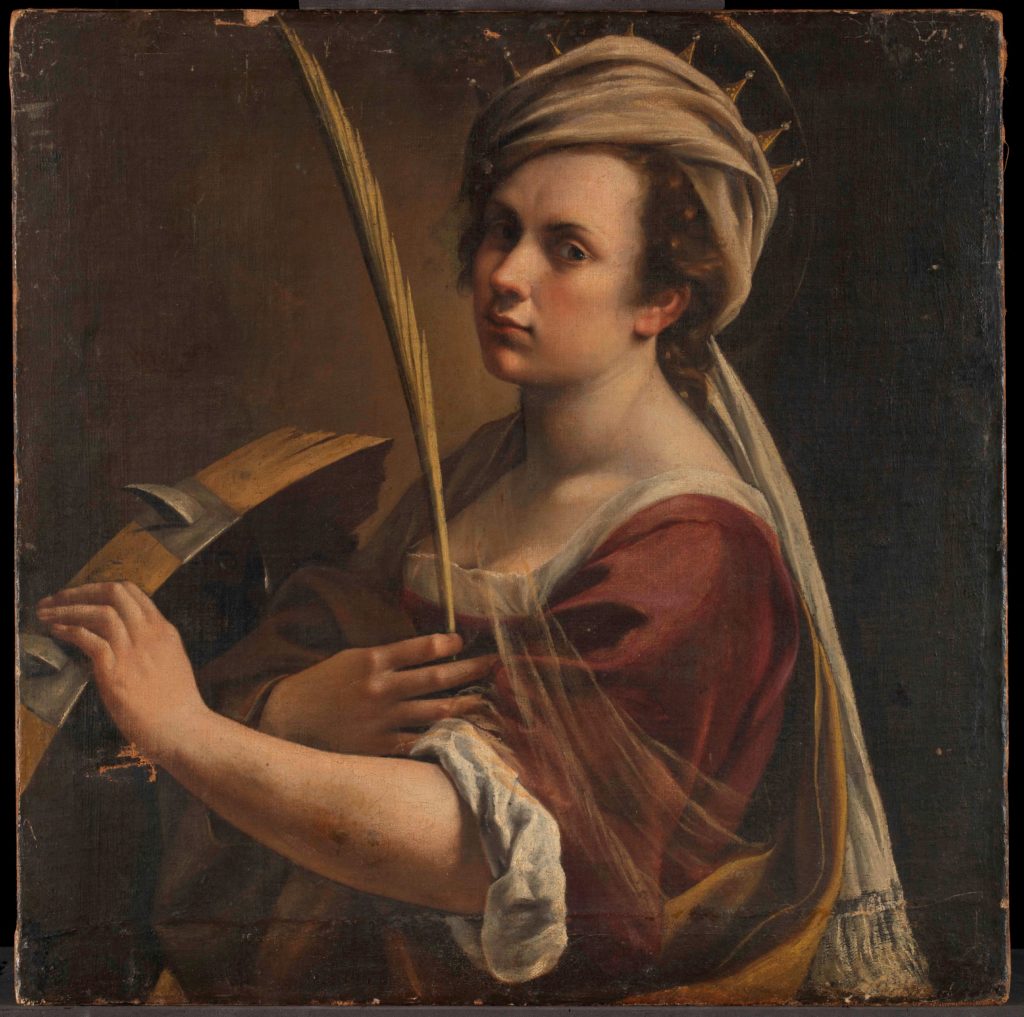
Artemisia Gentileschi, Self Portrait
as Saint Catherine of Alexandria (circa 1615). Courtesy of the
National Gallery, London.
Around
30 works are due to go on show alongside that painting next month,
many traveling from Italy. (A spokesperson for the museum says it
is in touch with lenders as “coronavirus is a rapidly changing
situation.” It is following
the advice of Public Health England and the Foreign
Office.)
The owner of the newly attributed picture says he understands
that the work may have been authenticated a little too late to make
it into the show.
What’s more, the National
Gallery has recently been under fire for the market boost it gave to
the Salvator Mundi when it included the
much-restored painting in its blockbuster 2011 Leonardo da Vinci
exhibition. That decision has been described as a game-changer in
elevating the painting’s value.

Orazio Gentileschi, David
Contemplating the Head of Goliath, now thought to be a
forgery. Courtesy of the Weiss Gallery.
The Other Gentileschi
The
National Gallery’s decision not to include the new Artemisia
Gentileschi work in the show contrasts with its enthusiasm in 2014
when it borrowed another newly discovered painting of the same
subject: David
Contemplating the Head of Goliath, which had just
been attributed to Gentileschi’s father, Orazio.
That
loan—once called “stunning” by Letizia Treves, the curator of
the Artemisia Gentileschi show—is now suspected of being a modern
fake.
The
work passed through the hands of the French dealer Giulano
Ruffini, who is now the subject of a
European arrest warrant. (Vincent Noce, who first broke the news about
the suspected Old Master forgery ring, has devoted a chapter
of his forthcoming book to the dubious “Orazio
Gentileschi.”)
Gillespie credits Papi with “recognizing an
important Artemisia Gentileschi painting from a tatty old
black-and-white photograph and being prepared to stake his
reputation on that instinct.”
The
conservator also pays tribute to the painting’s owner, who “took
the plunge” when it came up for auction at Hemple Fine Art in
Munich in December 2018, when it sold for €103,00
($113,000).
“He
got a very good deal,” Gillespie says. The auction record for a
work by the artist has since soared to $5.2 million, a figure
achieved at Arcuriel in Paris last November.
The
owner of the painting only began collecting Old Masters around
three years ago, focusing on 17th-century art—“an unfashionable market,
often with a paucity of solid research,” he says.
But
that meant he was able to “buy a great piece of art for a small
fraction of some lauded contemporary 20th-century
pieces.”
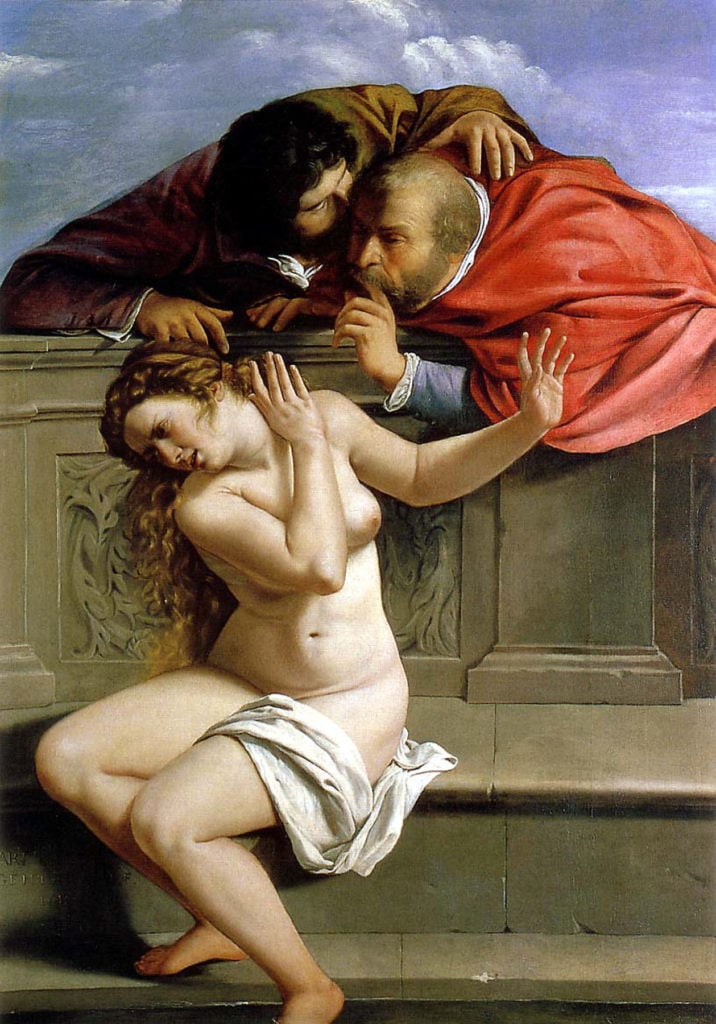
Artemisia Gentileschi, Susanna and
the Elders (1610–11). Courtesy of the Schloss Weißenstein
collection, Pommersfelden, Germany.
Artemisia Gentileschi’s heroic life story has
often colored the appreciation of her art.
Born
in Rome in 1593, she was trained by her father. When she was just
17, she was raped by the painter Agostino Tassi, and then endured a
trial in which she was held at fault.
In
1639, she and her father travelled to London from Italy, where he
was employed by King Charles I. Papi believes that the recently
rediscovered version of David and Goliath may have been the one
owned by the king.
“Artemisia” is on view at the National Gallery in London
from April 4 through July 26.
The post A Newly Discovered Painting by Baroque Master
Artemisia Gentileschi Will Go on View in London—But Not at Her
National Gallery Survey appeared first on artnet
News.
Read more https://news.artnet.com/exhibitions/artemisia-gentileschi-national-gallery-1790799
Further reading


Leave a comment