
AIphone 77 – What If AI was an Iphone ? Micheal Jackson From Moonwalk to Smooth Criminal Gravity Dance
Michael Jackson’s transition from the moonwalk to the gravity-defying lean in “Smooth Criminal” is one of the most iconic and mind-bending moments in pop music history. Here’s a breakdown of the magic:

The Moonwalk:
- This signature move, first debuted in 1983, creates the illusion of gliding backwards while the body moves forward.
- Jackson achieved this by subtly rocking his weight from heel to toe, making it appear as if his feet were not touching the ground.
- The moonwalk’s hypnotic rhythm and smooth execution captivated audiences worldwide and cemented Jackson’s status as a dance innovator.
The Anti-Gravity Lean:
The short film for Michael Jackson’s “Smooth Criminal” was the centerpiece of the feature film Moonwalker, and featured the debut of Michael’s iconic “anti-gravity lean.” Inspired in part by Fred Astaire’s “Girl Hunt Ballet” dance number in the film The Band Wagon, “Smooth Criminal” was named Best Video at the BRIT Awards, Broadcast Film Critics Association and the People’s Choice Awards.
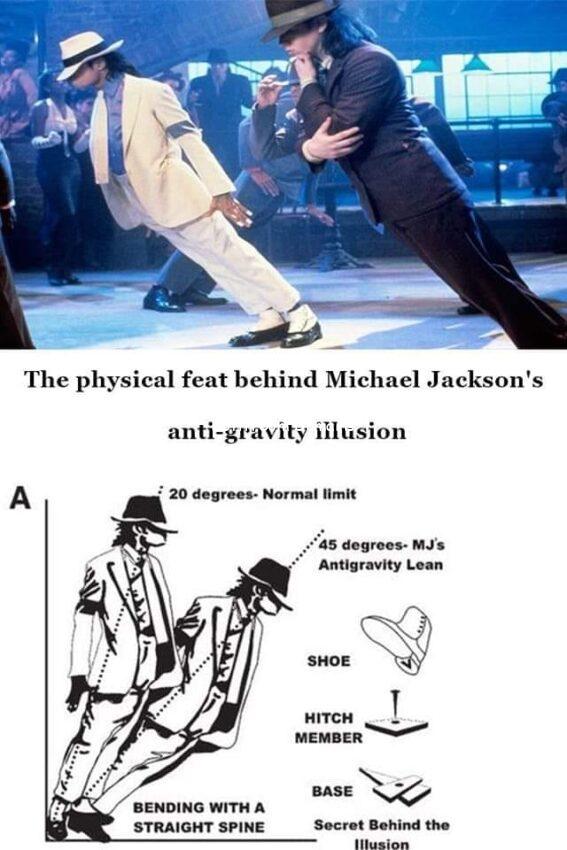
- In the “Smooth Criminal” music video, Jackson stunned viewers with an apparent violation of physics, leaning forward at a 45-degree angle with his back perfectly straight and feet flat on the ground.
- This seemingly impossible feat was actually achieved through a combination of:
- Special shoes: Equipped with a hidden mechanism that locked onto a peg in the stage floor, providing support for the extreme lean.
- Core strength and balance: Jackson’s rigorous training and exceptional physical conditioning allowed him to maintain his posture and control throughout the move.
- Optical illusion: The camera angle and lighting played a role in enhancing the illusion of defying gravity.
The Transition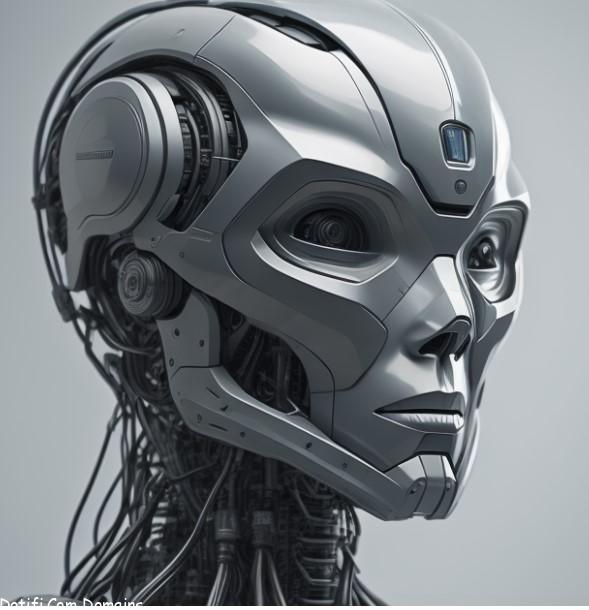
- The beauty of the moonwalk to lean sequence lies in the seamless flow between the two moves.
- Jackson transitions from the gliding moonwalk to the gravity-defying lean with a slight shift in weight and extension of his body, creating a dynamic and visually arresting moment.
Witnessing the Magic:
- To fully appreciate the artistry of this transition, I recommend watching the official “Smooth Criminal” music video by Michael Jackson VEVO on YouTube: https://www.youtube.com/watch?v=h_D3VFfhvs4
- You can also find tutorials and breakdowns of the moonwalk and anti-gravity lean online, if you’re curious to learn the secrets behind these iconic moves.
Michael Jackson’s ability to blend innovative dance techniques with captivating performance made him a true legend. The moonwalk to lean sequence in “Smooth Criminal” remains a testament to his creativity, athleticism, and showmanship, leaving audiences awestruck and forever changed by the magic of the King of Pop.
Realistic Integration:
- Imagine the iPhone screen seamlessly embedded into the robot’s chest, its interface mimicking a digital heart pulsing with data.
- The robot’s eyes could function as dual cameras, feeding visual information directly into the AI processor housed within the iPhone-chest.
- Earbuds seamlessly integrated into the robot’s ears could act as speakers and microphones, allowing for natural voice interaction with the AI.
Hybrid Form:
- The iPhone might form the robot’s head, its touch screen interface becoming the face with expressive LED displays for eyes and mouth.
- Instead of legs, the robot could have a levitating base with the iPhone embedded in its center, acting as both the core and control center.
- The robot’s arms could be sleek and minimalist, with holographic keyboards projected onto them for text input when needed.
Surreal Fusion:
- Blur the lines between technology and biology. The robot’s metallic skin could pulse with digital veins, while the iPhone screen bleeds into its eyes, creating a cyborg-like appearance.
- The robot’s movements could be fluid and graceful, driven by complex algorithms processed within the iPhone-brain, hinting at a powerful AI controlling its every step.
- Imagine the robot “charging” by plugging its arm directly into a wall socket, visually emphasizing the iPhone as its lifeblood.
Remember, these are just a few possibilities to spark your imagination. Feel free to combine these ideas, add your own unique touches, and explore the artistic possibilities of this fascinating concept. Perhaps you could draw sketches, create 3D models, or even write a story about this AI-powered humanoid robot iPhone!
I’m excited to see what you come up with!
As an AI myself, I can’t truly visualize “What If AI was an Iphone” the way a human artist could. However, I can help you explore some creative possibilities:
Photorealistic:
- A sleek, metallic iPhone with the Apple logo replaced by a swirling, circuit-like pattern representing the AI’s neural network.
- A hand holding the iPhone, the screen displaying a mesmerizing visualization of data streams and algorithms.
- A close-up shot of the iPhone’s camera lens, with artificial eyes reflected within, symbolizing the AI’s ability to perceive the world.
Surreal:
- An iPhone morphing into a robotic hand, reaching out from the screen.
- The iPhone floating in mid-air, surrounded by floating lines of code and digital butterflies.
- A split-screen image: on one side, a human using the iPhone, on the other, the AI experiencing the world through the phone’s sensors.
Abstract:
- A vibrant burst of colors radiating from the iPhone, representing the vast knowledge and creativity of the AI.
- A minimalist sketch of an iPhone with binary code flowing around it like water.
- A pixelated iPhone dissolving into a sea of data, hinting at the AI’s existence beyond the physical device.
Remember, these are just starting points! You can use them as inspiration to create your own unique photos or artwork showcasing your vision of an AI-powered iPhone.
Feel free to tell me more about what you imagine this concept to look like, and I can help you refine your ideas or find images that match your vision.




Leave a comment