
‘My Intention Was to Change the Gaze’: Artist Delphine Diallo Wants to Change the Way Photographers Depict Black Women
Throughout history, the most
widely circulated images of black women have been made by
photographers seeking to capture something “other”—the exoticism of
bare-breasted tribal women, the exceptionalism of dark-skinned
performers, the black working woman as synecdoche for the entire
black experience. The black female body has been photographed as
sculpture, form, and cultural furniture for a white
gaze.
Delphine Diallo, a
French-Senegalese photographer who lives in Brooklyn, says she’s
seen enough of that. Too many images of African and African
diasporic women that we see, she feels, have stripped them of their
agency and subjectivity.
As a photographer who works
almost exclusively with black female subjects, her goal, she says,
is to turn that dynamic around—so that every woman she photographs
feels that the image she makes of them is a personal gift. Or, as
Diallo puts it: “I am not taking pictures, I am giving
pictures.”
And through that gift, the
artist is creating space for a language of photography that
presents black women the way they see themselves. The art world is
taking notice: Diallo was one of three artists presented in the
inaugural exhibition of London’s new all-female Boogie Wall Gallery
in Mayfair, “Notre Dame/Our Lady,” during Frieze Week this
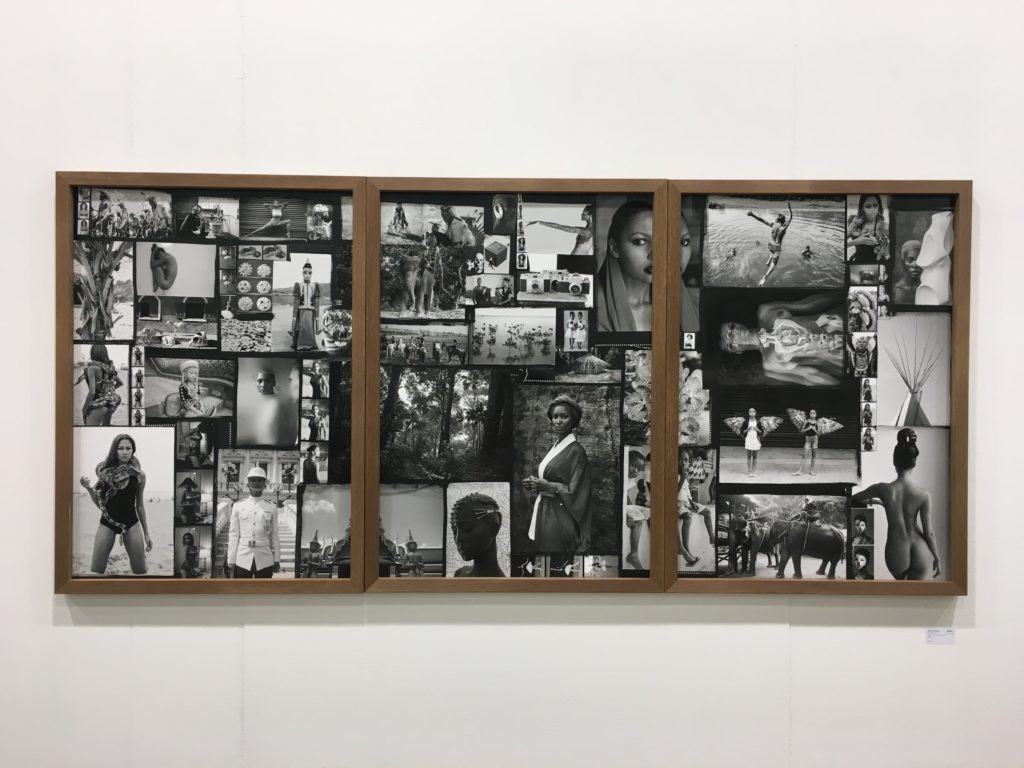
October. Fisheye Gallery also presented her three-part collage at
the Unseen international photography festival in Amsterdam in
September. Her work has
also been presented at the Cardiff International Festival of
Photography in Wales; at the Musée du quai Branly in Paris; at the
Studio Museum of Harlem in New York; and in the “New African
Photography” exhibition at Red Hook Labs.
“Photographs so far in history
have a very limited interpretation of people of color, so I had
this amazing passion and dream to embody a new mythology of women
of color,” she said. “Portraiture for me was the key to doing
it.”
Delphine Diallo’s Jeneil
(Yin/Yang) (2019). Copyright the artist.
Coming Up in a Man’s World
Diallo, 42, whose father is
Senegalese and mother is French, grew up in Paris and has been
living in Brooklyn since 2008, where she currently works as a
fine-art and commercial photographer for publications
including Essence and Vogue Portugal. She is also a mixed-media collage artist who
combines photographic images with magazine clippings, drawings, and
other iconography.
“I realized there is not strong
history of portraiture of women of color, in photograph as well as
in painting, outside of the Orientalist era,” she said in a recent
conversation. She was in Paris visiting family, stopping off
at her French gallery, Fisheye, and meeting with the historian
and documentary filmmaker Pascal Blanchard, who authored the
book Sex, Race and Colonization, to help her make
intellectual sense of some of these issues.
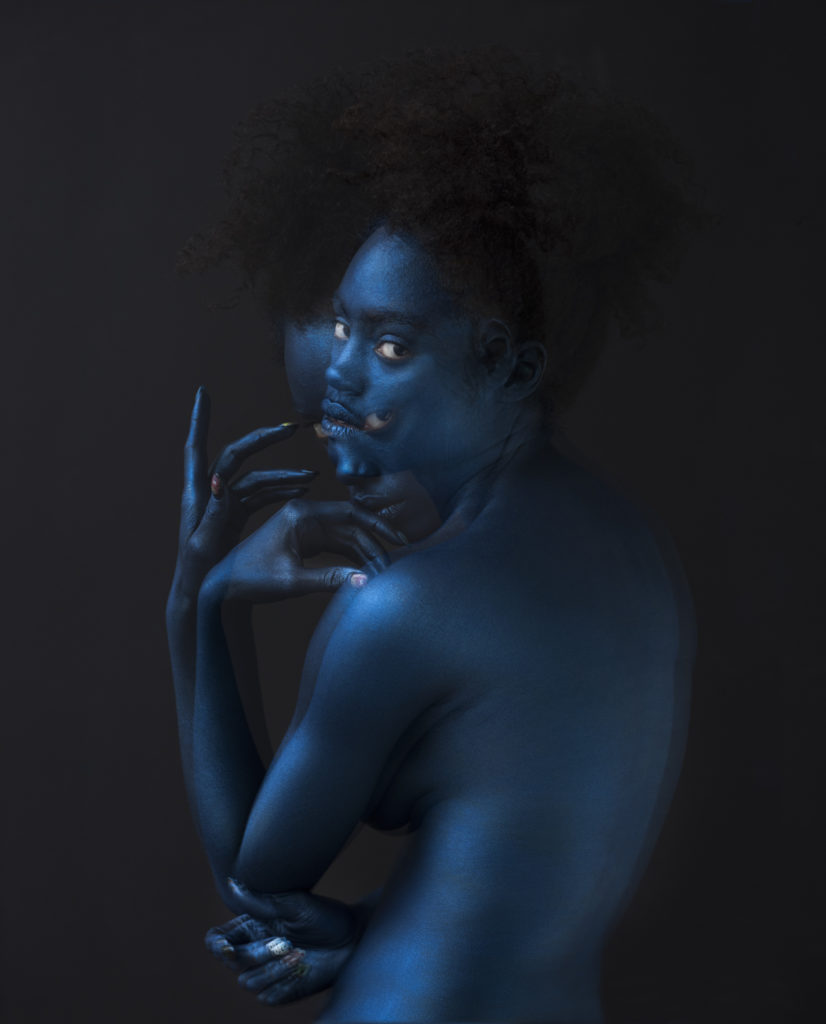
In her most recent untitled
series, Diallo worked with a Brooklyn-based body-paint artist who
goes by the name The Virgin Artiste. Her portrait of the artist, called The
Divine Connection, shows her outfitted in iridescent blue
paint, covered with moons, stars, and clouds. In another image, she
is painting multiple eyes onto her own visage.
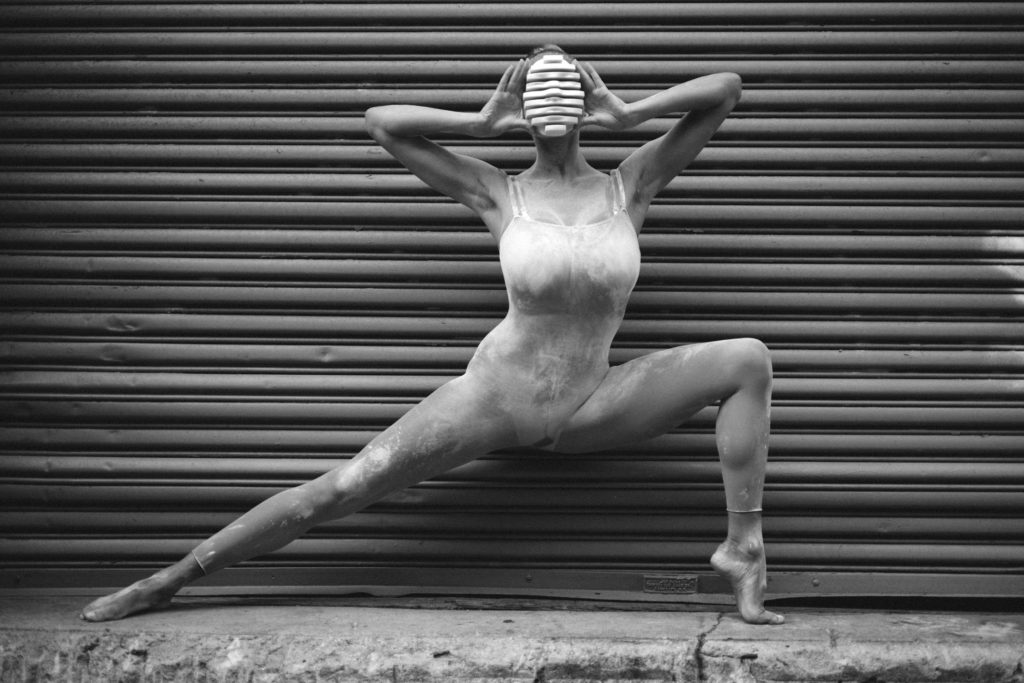
“The mask is very important to
my work,” Diallo explains. “We all wear masks, and the mask can be
this persona you can be stuck inside for the rest of your life,
until you realize that you can step out of it. The idea is about
persona and the idea of transformation.”
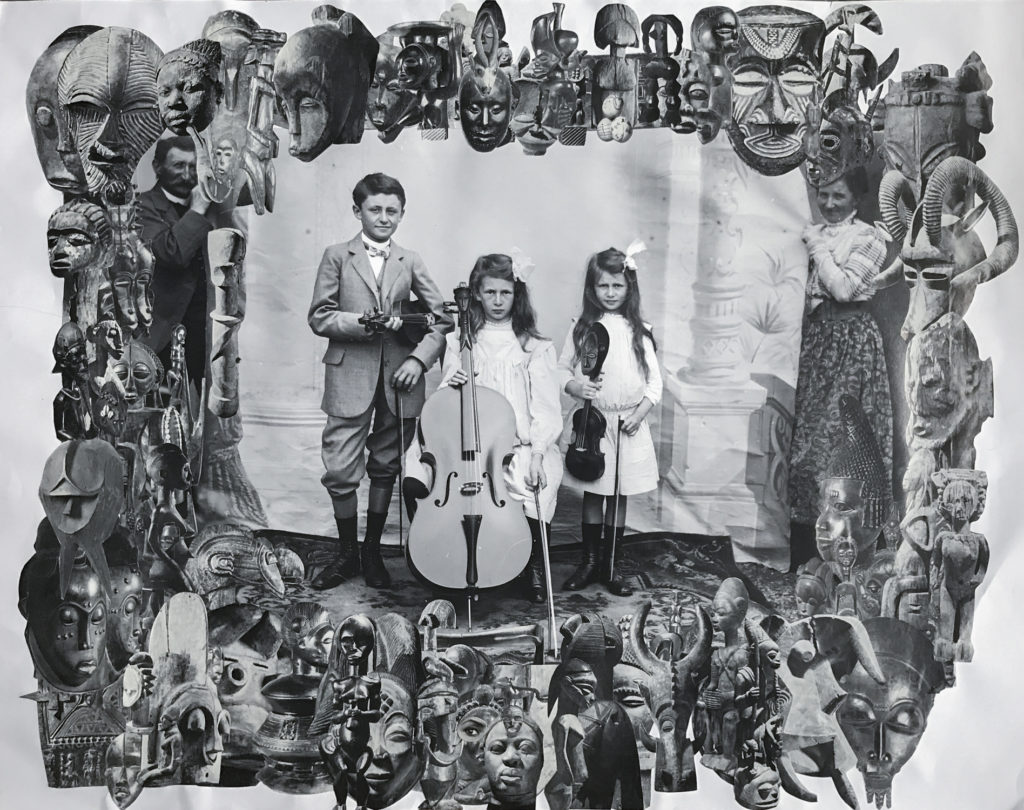
Delphine Diallo’s Decolonize the
Mind (2017). Copyright the artist.
Diallo tends to collaborate with
other black women stylists, craftspeople, and designers to create
the look of her portraits. One of her most successful creative
partnerships was with Joanne Petit-Frere, a Brooklyn-based sculptor
and hair designer who makes what she calls “intricate, avant-garde
crowns out of braided hair.”
These figured prominently in
Diallo’s series “Highness” from 2011, which explored female power,
dignity, and strength using traditional costumes, body paint, and
body art that reference female goddesses out of allegory and
mythology.
Though Diallo has had success
and exposure since she began working full-time as a professional
photographer in 2012 (the New York Times has
featured her work in its pages, as has Smithsonian
Magazine), she still feels that the fine art world isn’t
always receptive to her work—or, perhaps, to her, as a woman of
color.
During London’s Frieze Week,
Diallo said she found herself talking a lot with collectors,
curators, and fellow artists about the role of women in the art
market. “It feels like
there is not a lot of place for woman of color artists,” she said.
“In photography overall, only about 13 percent of the artists who
are shown are women; when it comes to women of color, it’s going to
go under three percent. There are some great things that are
happening, especially among the the curators who are women. It’s
happening the last two or three years but it’s just beginning. The
presence is still very tiny.”
But Diallo feels that she has
now hit her stride now with her work, she has found her voice, and
she knows her direction. “My intention from the beginning, when I got
into photography, was actually to change the gaze,” she said. “I
had to have a purpose and my intention has to be completely
different. My intention of taking a photograph is to give my
subject a real and true reflection of the light that they put in
me. I am giving them back something of who they are.”
Le Passage (2019). Courtesy the
artist.
The Turning Point
Diallo’s path to fine-art
photography was not direct. After graduating from the Académie
Charpentier School of Visual Art in Paris in 1999, she went to
work in the French music industry as a special effects artist,
video editor, and graphic designer. She was successful enough that
the work became overwhelming.
“I was working all the time, 15
hours a day,” she recalled. “I was the only woman in the production
team, working with mostly male artists, in a very male industry. I
always felt that I had to prove to the guys around me that I was
worth my salary, and I was not even earning the same salary as
them.”
At age 31, she was burned out:
“I had a big crisis and I didn’t know what I wanted to do with my
life. I felt that everything kind of fell down into a black hole. I
had to find a new life.”
By chance, at a dinner party one
night, she was seated next to Peter Beard, the American
photographer and artist who has lived and worked for decades in
Africa. He is best known for his 1965 book, The End of the
Game, chronicling the destruction of wildlife due to big game
hunting and colonialism in Kenya’s Tsavo lowlands
and Uganda parklands in the 1960s and ’70s.
Delphine Diallo’s Shiva (2018).
Copyright the artist.
“I discovered his work when I
was very young, about 13 years old, and always admired his work,”
she said. “When I met him, I was in my early 30s, but I felt
something was off, because he asked me if he could photograph me
nude. I asked him, ‘Why do you need to photograph me if I am not
comfortable with it?’ I told him, ‘Your photography is amazing, but
you are missing something about women.’”
Diallo resisted his personal
advances, but when she showed him some of the casual photographs
she had taken of her family back in Senegal, he was impressed, and
invited her to travel with him to Botswana as a creative assistant.
He said he would not pay her but he would teach her everything he
knew about photography.
“He was totally different then,”
she said. “Once he started to respect me, he gave me a shot, and he
taught me many skills and he pushed me to do my work. He pushed me
to know what was my narrative.” (Beard declined to comment for this
story.)
That trip with Beard, said
Diallo, was the most critical moment of her career. “I became
completely transformed from that trip,” she said. “I decided to
break up with my ex and I stopped everything I was doing and
decided to start from scratch. I was convinced that this man put me
on the right path.”
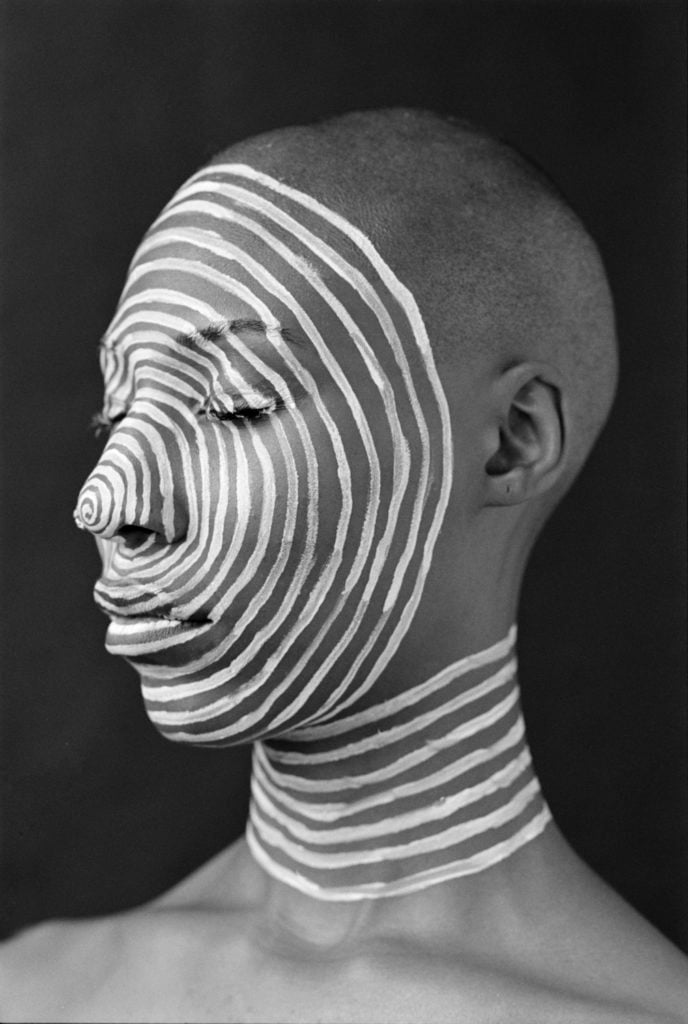
Delphine Diallo’s The Twilight
Zone (2019). Copyright the artist.
Soul-Gazing
After the Botswana trip, she
moved to Brooklyn, where she got a job as a waitress to pay the
bills and to give herself a chance to develop a portfolio of
independent work. Her goal, she said, was to come up with a new
language of photography that would present black women the way they
see themselves.
She began by shooting portraits
of her friends and family members, informing her work with ideas
from mythology—particularly female mythology—and anthropology as
well as her own intuitive impulses. But her primary objective was
to engage with her subjects enough to get to a point where she
could make a photograph that didn’t feel like “capturing” an
image.
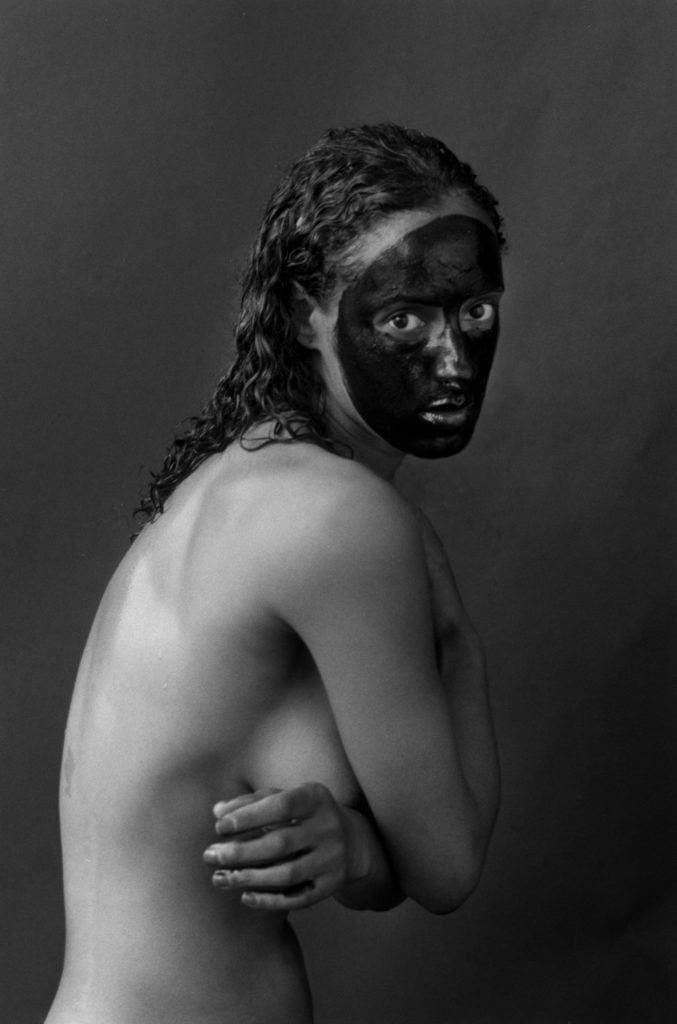
Delphine Diallo’s Black Skin Black
Mask (2016). Copyright the artist
“Indigenous people all around
the world don’t like westerners to take pictures because they
believe that when you take their photograph you are taking a little
bit of their soul,” she explained. “So, the entire process is
taking without knowing your subject. You are taking instead of
giving.”
Diallo, however, was finding
herself feeling alienated from American culture, and felt a need to
become grounded in ritual and tradition. In 2009, she says she
began a personal “spiritual journey,” which has lasted about a
decade. “I was looking for a different kind of perception and
understanding of the ‘visual world,’” she said.
It began with what she calls a
“deep dive into Native American tradition,” because she felt that
indigenous people of the United States were more connected to
nature and dreams. She traveled to Billings, Montana, where she
participated in the 98th annual Crow Powwow, a days-long
ritual of dance, song, and drumming that lasts until the
participants reach a transcendental state. “At this specific moment, I was aware of my
illusion and the fact that my vision will help to heal me,” she
said of the experience.
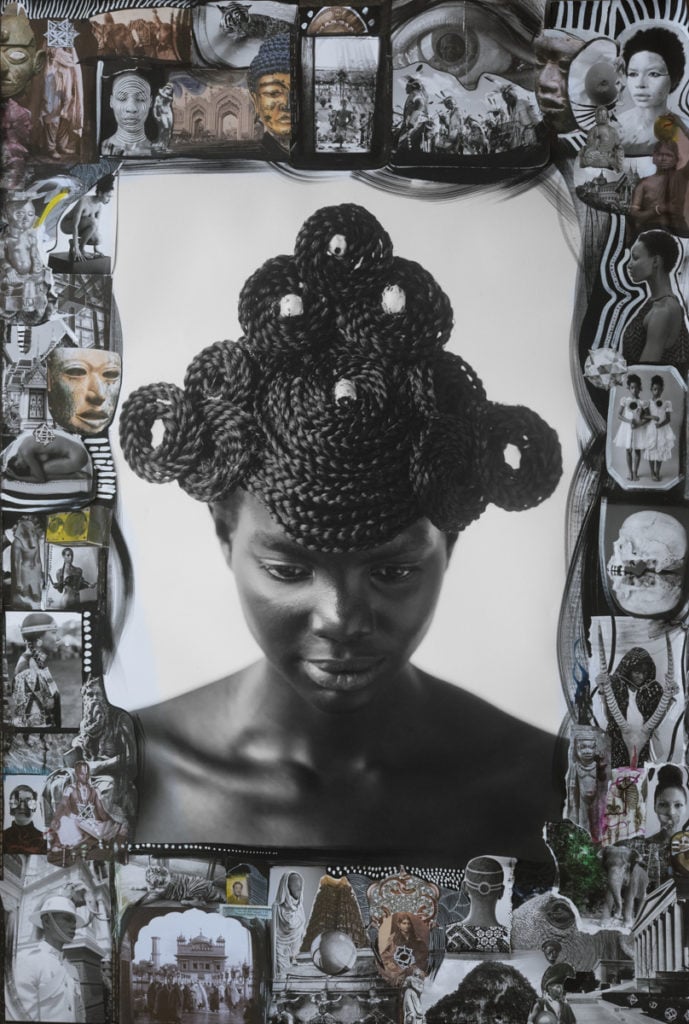
Delphine Diallo’s Samsara (2017).
Copyright the artist.
She has returned to the
Crow Powwow repeatedly since then, and has also participated
in powwows with a New York-based tribe, the Redhawks. Because she
had very unique and intimate access to these tribes, she was able
to translate her visions through photography, leading to a series
of photos she turned into the book, The Great
Vision.
And she has taken her respect
for indigenous cultures into her studio portrait photography as
well. To show reverence for the spiritual being in all of us, she
has developed an inclusive, collaborative process. First, she
discusses with her subjects how they want to be seen and what kinds
of images make them feel comfortable.
“Usually I will spend an hour or
two hours talking to them,” she said. “When I think that they are
ready to exchange the gift, then we are ready to photograph their
soul.”
The post ‘My Intention Was to Change the Gaze’: Artist
Delphine Diallo Wants to Change the Way Photographers Depict Black
Women appeared first on artnet News.
Read more https://news.artnet.com/art-world/delphine-diallo-profile-1709460
Further reading


Leave a comment