
Our Museum Is Considered a Leader in Equity and Inclusion. Here’s What We’ve Done—and Why We Have a Long, Long Way to Go
The Oakland Museum of California
was born in the shadow of racial division and protest. We opened
our doors in 1969 amid the demonstrations to free Huey Newton,
founder of the Black Panther Party, who was on trial in the wake of
a violent exchange with police. His trial took place across the
street from the museum, at the Alameda County
Courthouse.
In this context, the museum’s
founding director, Jim Holliday, attempted to form a community
advisory committee amid calls to better incorporate community
members into the project. He was fired for insubordination six
weeks before the museum opened; other museum leadership resigned in
protest of his ouster.
The commitment to equity, which
is baked into our DNA, is also compelled by our location in one of
the most diverse cities in the country, defined by a history of
social justice and activism. Over the past decade, we have worked to live up
to those values. We have diversified our board, our staff, and our
audience, and have begun to measure the impact we are having on the
well-being of our community beyond traditional measures of
attendance or financial benchmarks, which tend to reinforce the way
things have always been done.
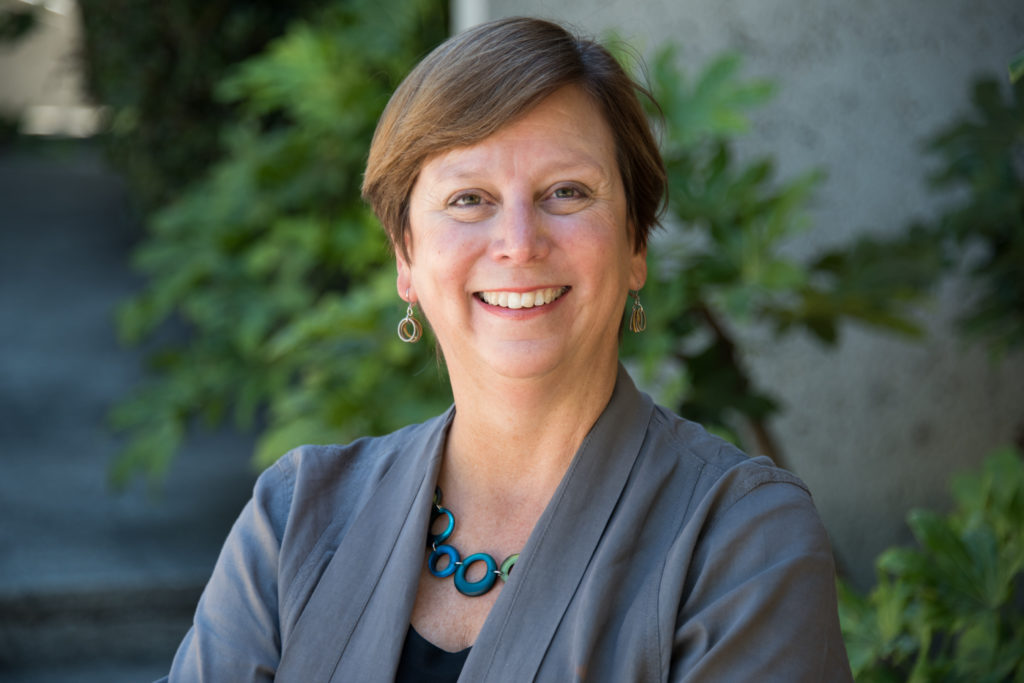
Lori Fogarty. Photo: Terry Lorant.
At the same time, our external
research—and, even more importantly, the internal reckoning we’ve
confronted in recent weeks—have revealed how much further we have
to go. I present some of the steps that we’ve taken with humility,
acknowledging that we have many more steps to take collectively as
a field and within our own organization as we work toward
justice.
Inside Out
We know, especially now, that a
commitment to diversity, equity, inclusion, and access begins at
home. Over the past several years, we have worked to increase the
diversity of our staff and board, to develop tools for greater
intercultural understanding, and to place engagement with our
community at the core of our work. This involves not only setting
benchmarks, but also making sure we are
measuring the right things.
On the board level, we set a
specific goal for people of color to comprise 40 percent of the
members; we met that goal in 2016 and have sustained it since.
Seven years ago, we established a community engagement committee to
help design internal training specifically for trustees related to
equity and inclusion and to champion our work with community
partners. We are now one of 50 museums across the country
participating in the American Alliance of Museums’
Facing Change
initiative to increase board
diversity, a two-year effort that involves training, the
compilation of a diversity and equity plan, and the recruitment of
at least two new trustees of color.
On the staff side, we
restructured our entire organization in 2011 to place the visitor
at the center and to dismantle some of the silos that typically
exist in museums. We created new positions to serve as visitor
advocates and established an evaluation department so that we could
hold ourselves accountable. While introducing these functions into
a museum may not seem significant, incorporating the perspective of
visitors and community members into discussions about planning
exhibitions and evaluating success has been transformational. We
now launch most major projects with a convening that includes
community members with lived experience in the topic to help us
shape the content. And every major exhibition concludes with a full
debriefing led by our head of evaluation so that team members can
hear directly about visitors’ experiences.
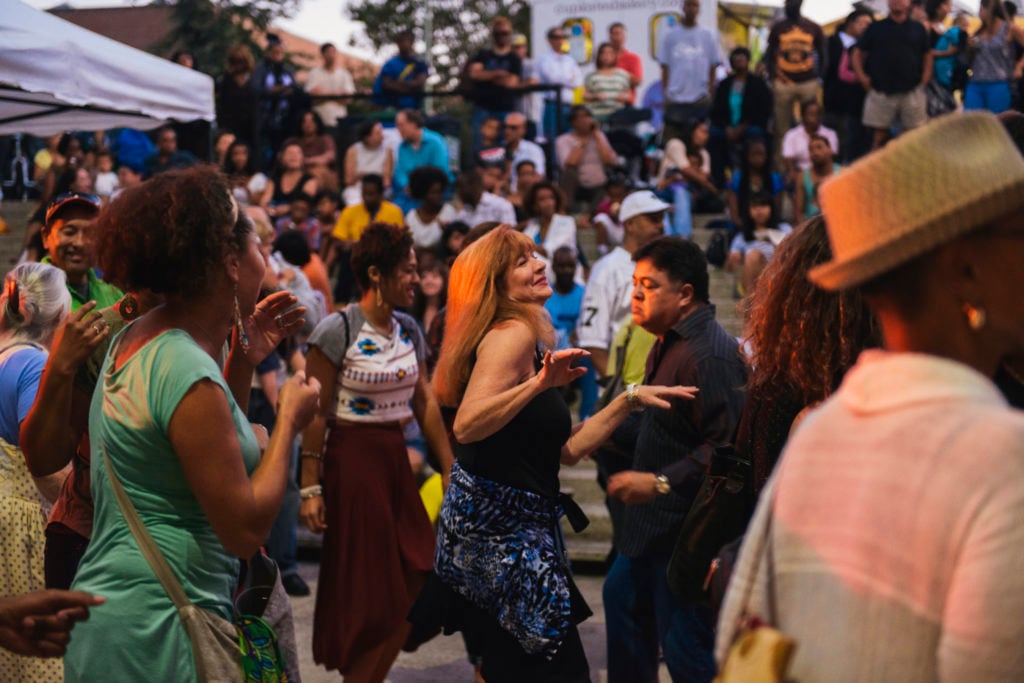
Every Friday Night, from 5 to 9 pm, the
Oakland Museum of California opens its doors on 10th Street for
Friday Nights @ OMCA. Image: Courtesy of Oakland Museum of
California. Photo: Shaun Roberts.
We’ve also created new teams and
initiatives to cultivate leadership at every level of the
organization, including a paid internship program. Beginning in
2013, we put in place new processes for recruiting, hiring, and
compensation designed to reduce bias and promote equity. For
example, we created new job description templates for positions to
eliminate barriers for hire, including education level, and
developed a compensation structure that does not factor in degrees
or tenure. We also implemented a rigorous hiring process that
includes panel interviews for all staff openings, which aims to
counterbalance individual biases.
A commitment to equity must also
extend beyond the staff. Last year, we began shifting our approach
to investing in order to incorporate sustainable and responsible
practices that align with our social impact priorities. While we
have not yet formalized a new investment policy or divested in
specific sectors, we have engaged the staff and board in
discussions to consider how all our investments, including vendor
relationships, support our mission. Our current context will surely
influence these discussions.
The journey to make equity and
inclusion a central aspect of every person’s job—as well as a
fundamental responsibility of governance—has taken years and
significant commitment from every level of the organization. It’s
also taken investment. This has sometimes required us to make
difficult choices—such as the decision to focus less on technology
and digital engagement in recent years. These are choices that, as
with everything right now, we’re having to revisit as the museum
remains closed to the public. And yet our sustained focus on equity
positions us to move forward now with even deeper work around
anti-racism.
Outside In
This commitment is inextricably
linked to our relationship to our community—ties that have been
strong since the beginning, as the museum served as a department of
the city of Oakland for most of its history. Since the 1970s, we
have worked with advisory councils and volunteer groups to
connect the museum to the particular needs of Oakland’s diverse
communities. Two of our active committees today include our Dia de
los Muertos Committee, which leads an annual community celebration
now in its 26th year, and the Native Advisory Council, which
provides expertise and guidance on issues related to Native
collections, programming, and cultural practices.
Over the past few years, we have
doubled down on this commitment. We have collaborated with
community members in co-creating programming with deep local
resonance, such as All
Power to the People: Black Panthers at 50, RESPECT: Hip-Hop Style and
Wisdom, and
Queer California: Untold
Stories. Our Friday
Nights at OMCA, a weekly festival of music, dance, food, and
art-making, has been a game-changer for our institution, attracting
some 200,000 people annually. Together, these programs have made
OMCA much more than a museum. We are now seen as an indispensable
community resource and a gathering place for all of Oakland and the
East Bay region.
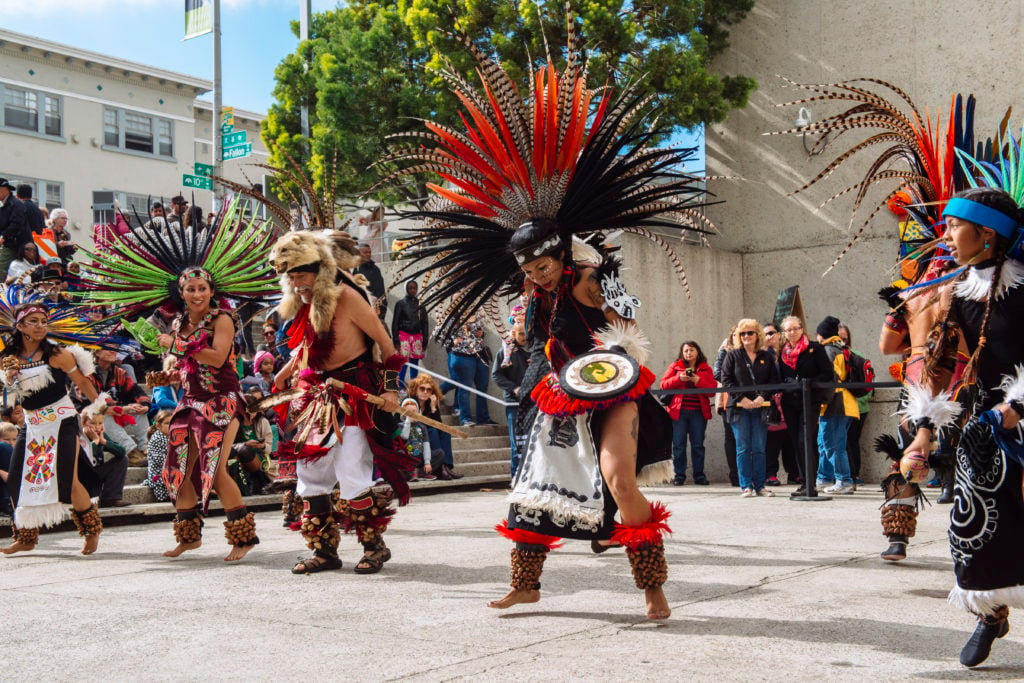
Dia de Los Muertos community celebration
at the OCMA. Courtesy of the Oakland Museum of California. Photo:
Shaun Roberts
We’ve been able to measure our
success because of the investment we’ve made in evaluation. Our
highly local audience (90 percent from a 50-mile radius) is more
diverse culturally (56 percent people of color in 2019 compared
with 46 percent in 2017) and economically (58 percent are low and
middle income) as well as younger (62 percent under 45 in 2019
versus 58 percent in 2017), with many more families attending with
young children. These shifts make our audience a closer reflection
of the local population of Alameda County, which comprises 60
percent people of color.
Over the past several
years, we’ve also worked
to identify our social impact—how successful we have been in building
greater trust, understanding, and connection between people and
communities. As of 2019, we’ve developed specific metrics to
regularly measure (and share) our social cohesion outcomes. This
examination has led to a fundamental
change in how we define success. Attendance statistics,
financial metrics, and audience demographics are the outputs and
outcomes of our work, but we are now called to prioritize our
impact—the real difference we are striving to make in the
world.
So Now What?
In many ways, our museum has
been seen as a leader in the field of diversity, equity, inclusion,
and access and is looked to for best practices in community
engagement. But as with museums across the country, we now have to
take stock like never before. Since our founding, we’ve been known as the
“Museum of the People.” But like most museums, we have never fully
realized the vision to be of, by, and for all of the
people.
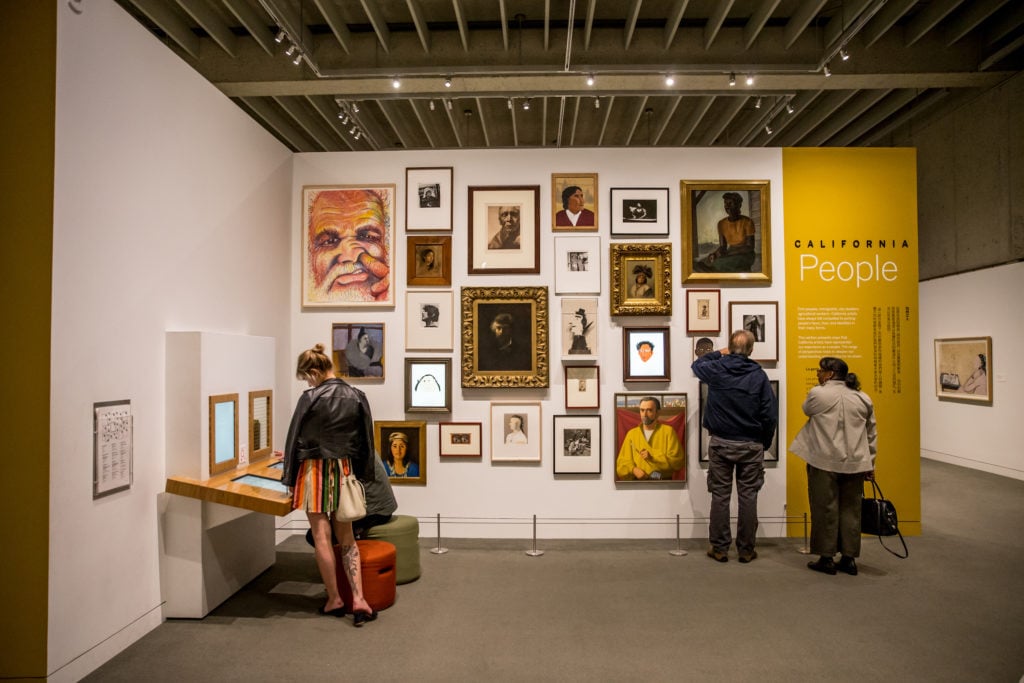
The Oakland Museum of California.
Courtesy of the OMCA. Photo: Odell Hussey Photography.
Last week, even as I was honored
to speak to colleagues across the country about diversity and
equity at our virtual American Alliance of Museums conference, I
was also called upon by our staff to see, acknowledge, and be held
accountable for the inequities in our own institution. These
inequities include a lack of black people in key roles,
particularly within the curatorial ranks. We’ve heard as well a
call for greater transparency and participation by broader staff in
decision-making, and respect for roles and expertise that have not
been typically valued within museums. Beyond critiques of our
institutional practices, I’ve listened to the pain, exhaustion, and
despair of black people and people of color with whom I’ve long
worked. And I’ve walked the streets of my city and seen murals that
appear on the plywood boards that cover broken windows paying
tribute to black lives lost and calls for reparation and
justice.
As we move through quarantine,
we’ve begun to consider how to reinvent our institution when we’re
able to reopen our building. That reimagining has become a cry for
action from the inside out and the outside in.
So, our journey continues. I
know it will take every bit of training and learning and all the
tools we’ve developed in recent years. But mostly I know it will
require listening with self-awareness, taking a stand with
compassion and courage, and reimagining what a museum of, by, and
for the people can truly be. Black Lives Matter. Black Thoughts
Matter. Black Stories Matter.
Lori Fogarty is the director
of the Oakland Museum of California.
The post Our Museum Is Considered a Leader in Equity and
Inclusion. Here’s What We’ve Done—and Why We Have a Long, Long Way
to Go appeared first on artnet News.
Read more https://news.artnet.com/opinion/lori-fogarty-oakland-op-ed-1885446
Further reading


Leave a comment