
A Small Museum in the Netherlands Is Letting Anyone Call Its Staff to Talk About Art. Here’s What I Learned From My Illuminating Chat
If your inbox is anything like mine these days, it’s probably
accumulating promotional emails for online viewing rooms, digital
art platforms, Instagram takeovers, and intellectual e-talks trying
to make this extraordinary time of isolation a little more
enriching.
Sifting through the emails, I empathize with the efforts, which
are surely all in earnest. The art world’s economic crisis is
compounded by an existential one, and its various players are
trying to stay connected with business liaisons and the public
without the usual carousel of openings, dinners, talks, and fair
floors encounters.
But I still find myself full of ennui. Going to a live-streamed
art opening just isn’t the same. The Zoom webinars help and
the Houseparty app can offer
a bit of now-forgone whimsy, but screens don’t quite capture the
key social pillar of art communities.
That’s why I was enchanted when I learned of a Dutch museum that
was offering a “telephone service” in which you can ask to receive
a phone call from an employee and talk about art for 10 minutes
with them. Like many, I’m working from home while a three-year-old
nonchalantly deconstructs the house, which I solemnly put back
together again at the end of each day.
I’m totally ready to try something new.
I signed up for “Viewphone,” the Lisser Art Museum’s creative
response to self-isolation, which connects its previously
public-facing museum workers with a public that is stuck at
home. Every Friday afternoon, participants who sign up over
email receive a short but purpose-filled call from a tour guide, a
curator, a custodian, or even the director. The employee chooses
one work of art and walks the listener through how it looks, what
it represents, or otherwise means to them.
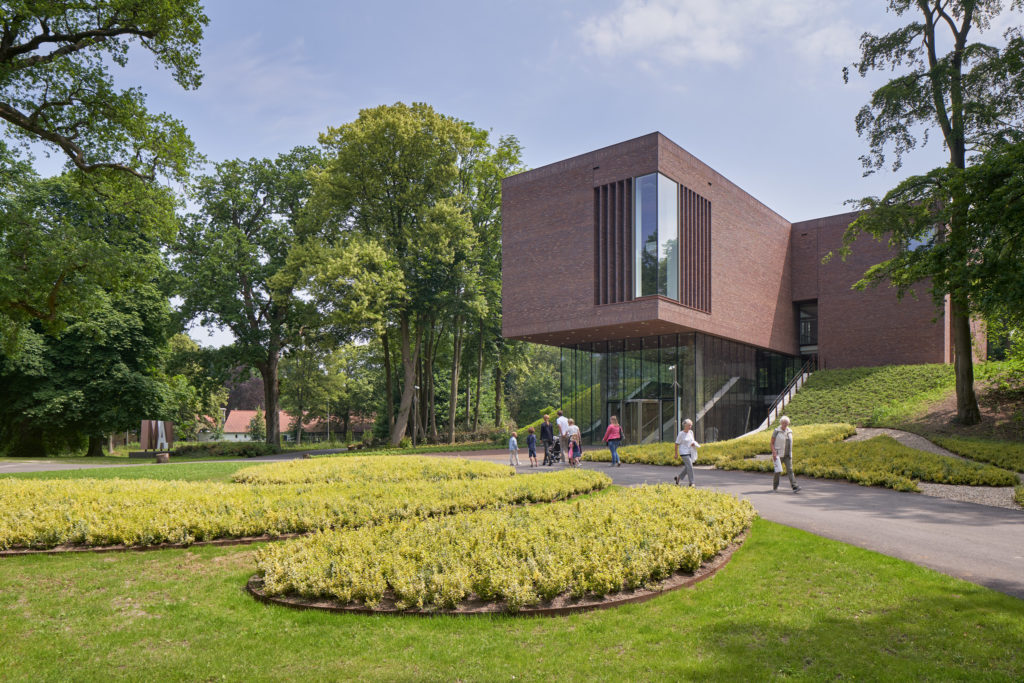
Lisser Art Museum by Ronald Tilleman.
Courtesy of Lisser Art Museum.
The recently opened, hypermodern building houses part of the
private art collection of the heirs to the Dutch grocery chain
Dirk—and all the art is in discourse with food. There is, for
example, Yinka Shonibare’s dinner table-sized work The
Last Supper and Itamar Gilboa’s 8,000-piece Food
Chain Project made up of porcelain versions of food he ate
over the course of a year. Yet the collection is, like many
museums, under lock-and-key until at least the end of April when
the European nation hopes to further ease restrictions.
A man named Richenel calls me at 2:30 p.m. He’s part of the team
of guides, and he sounds very nice. He asks me where I’m based, and
what I know about the museum. I find the whole thing disarming from
the get-go even before Richenel starts to describe a sculpture of a
woman holding a child (Can he hear my kid in the
background?, I wonder). She is wearing an austere-looking coat
and carrying grocery bags, he says, and then asks me to imagine
what’s inside them. Through that process the work starts to gain
some detail and dimension. He says the mother, who is about 30,
looks like she may be struggling, but that the child is beaming up
at her. I cannot help but draw a personal association, and I find
quiet relief in the latter detail.
“Duane Hanson,” I guess incorrectly. It turns out it is a 2013
work by the Australian sculptor Ron Mueck, an artist who makes
hyperreal sculptures in surreal scales. Richenel says this was the
first piece he encountered in the museum when he came for his job
interview.
I am familiar with the artist, but have not thought much about
Mueck’s work before. We talk a bit more about the project, why the
sculpture is not life-sized but is scaled to be quite small, and
then we share a bit about ourselves before saying goodbye. He says
he will email me a picture of the work.
I feel restored. I realize that what I am missing is art,
yes—and people—but also spontaneity. The whole “what day is it?”
feeling that oozes through our isolation era is exaggerated by the
total lack of random encounter.
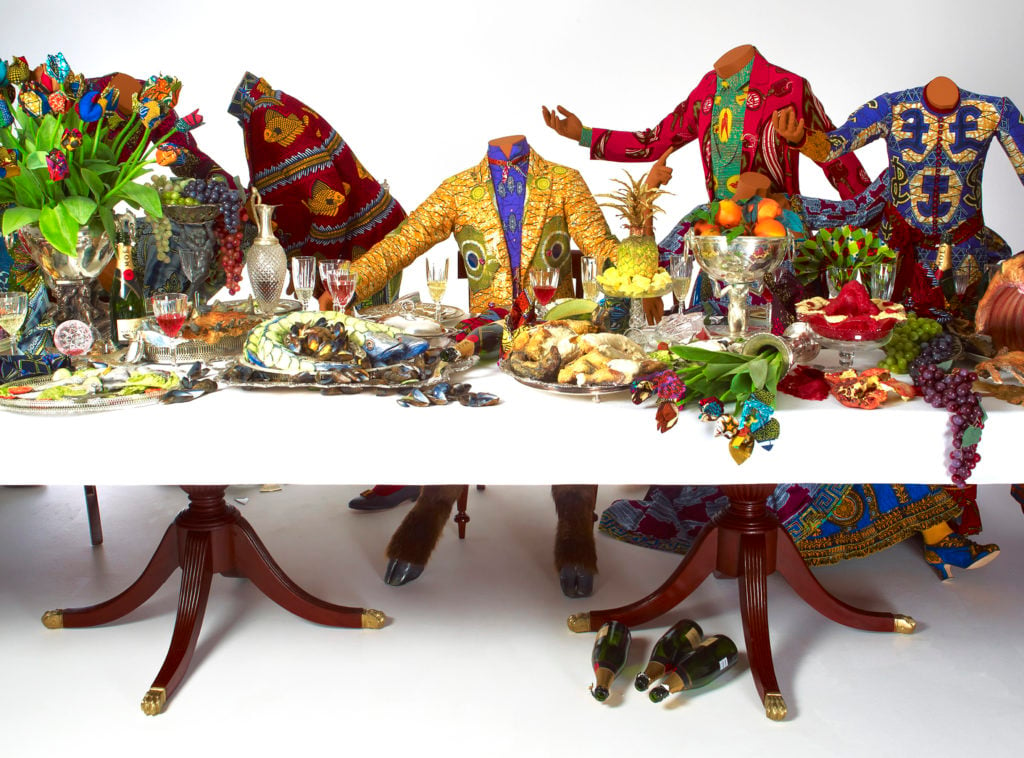
Yinka Shonibare, Last Supper
after Leonardo. Courtesy of the Lisser Art Museum.
Museum director Sietske van Zanten says the idea for the call
program came from a core question that arose after the lockdown
began. “We asked ourselves, what did we miss?” she tells me over
the phone later. “I may have more art historical knowledge and know
the acquisition background, but no single one of us alone holds the
virtue of the museum.”
So far, callers have been pleased, she says. “Everyone is
excited about it. The point is to give access to art, and knowledge
does not need to be a boundary.” It’s not really a heavy lift
for the museum staff who are sheltered-in-place with a wealth of
knowledge to tap into. While a 10-minute session with a curator
might yield more art-historical knowledge, the perspective of the
custodians is equally valuable and interesting.
It’s not that likely that I will ever make it to the Lisser Art
Museum and meet face-to-face with Woman with shopping
bags, but I won’t soon forget it. Opening Richenel’s email
later, I look at my matchmaker artwork again, for the first time.
Her hair is pulled back, an unremarkable shade of brown, and she is
wearing loafers with cuffed jeans, holding thin plastic shopping
bags, and a wool coat is buttoned up over a baby. She is definitely
of our epoch, but there is something about her that defies time,
that even defies motherhood. She appears to me as a tragic hero of
the post-industrial condition: tired, struggling, working
double-duty. These are feelings many can relate to, but had she
been just another image in my feed, who’s to say I would have
stopped to notice?
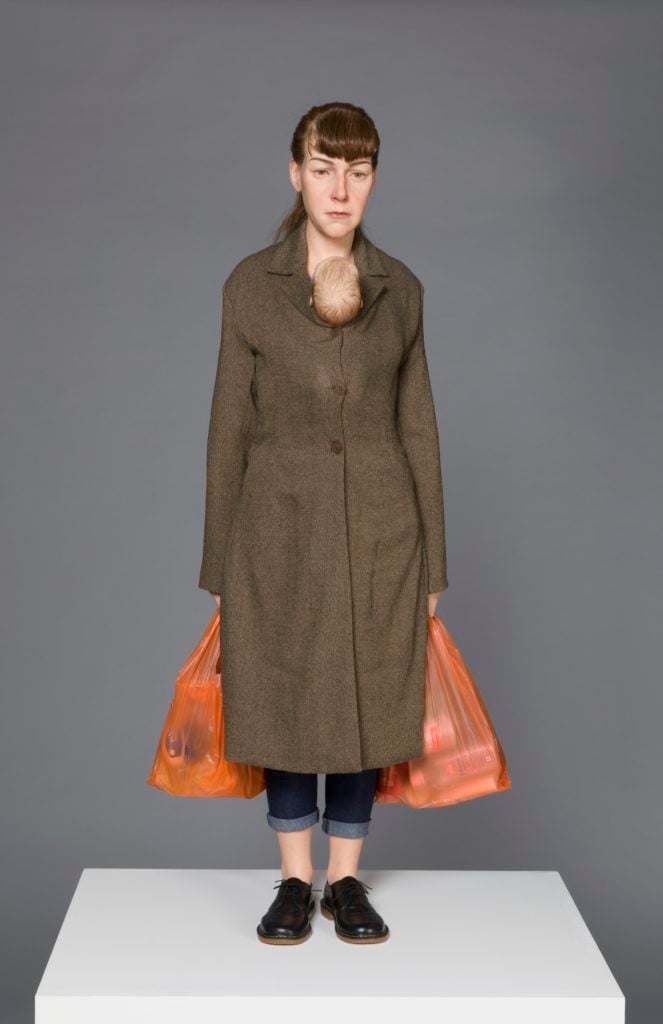
Woman with shopping bags by Ron
Mueck (2013). Courtesy Lisser Art Museum.
The post A Small Museum in the Netherlands Is Letting Anyone
Call Its Staff to Talk About Art. Here’s What I Learned From My
Illuminating Chat appeared first on artnet News.
Read more https://news.artnet.com/exhibitions/lisser-art-museum-phone-call-1837677
Further reading


Leave a comment