
Six Spectacular Art Sites in Europe for the Luxury Traveler
Europe is home to some of the
world’s most noteworthy works of art. Across the continent, art
destinations abound, and with them the chance to experience
thriving local cultures. It doesn’t hurt that, along the way, there
are beautiful, art-filled hotels boasting old-world glamour, plus
more than a few Michelin-starred restaurants to visit in between
the blue-chip galleries and fashionable boutiques.
From the Austrian Alps to the
South of France and the forests of Northern England, we’ve rounded
up some of the top art journeys. Keep them in mind the next time
you find yourself in an indulgent mood whilst traveling in
Europe—and heed our tips on how to make these can’t-miss
destinations as luxurious and over-the-top as
possible.
Skyspace-Lech by James
Turrell
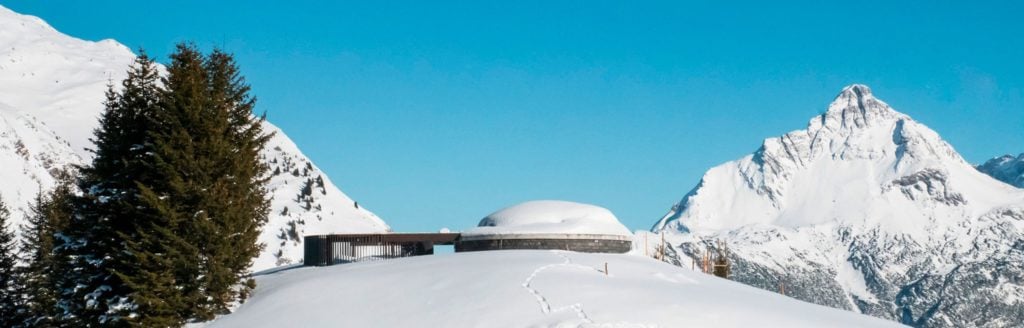
Skyspace-Lech in Lech am
Arlberg. Photo courtesy Getty Images.
WHAT IT IS:
Perhaps the most unique and hard to reach of James Turrell’s famous
installations, Skyspace-Lech is a lightroom that sits
1,780 meters above sea level in the mountain village of Lech am
Arlberg, nestled in the Austrian Alps. Accessible via hiking trail
or by cable car, the location offers stunning views of the nearby
mountains, while the installation seamlessly integrates into the
landscape. It is said that Turrell became captivated in the area
while hiking there himself, and began to envision a work that would
meditate on the region’s beauty. The resulting skyspace is composed
of a 15-meter tunnel which leads to an open-air room that’s only
truly activated at sunrise and sunset.
WHERE IT IS:
Lech am Arlberg, located in the heart of the Austrian
alps.
WHERE TO STAY:
Severin*s–the Alpine Retreat, where the cozy feeling of a ski lodge
meets the upscale experience of a five-star hotel.
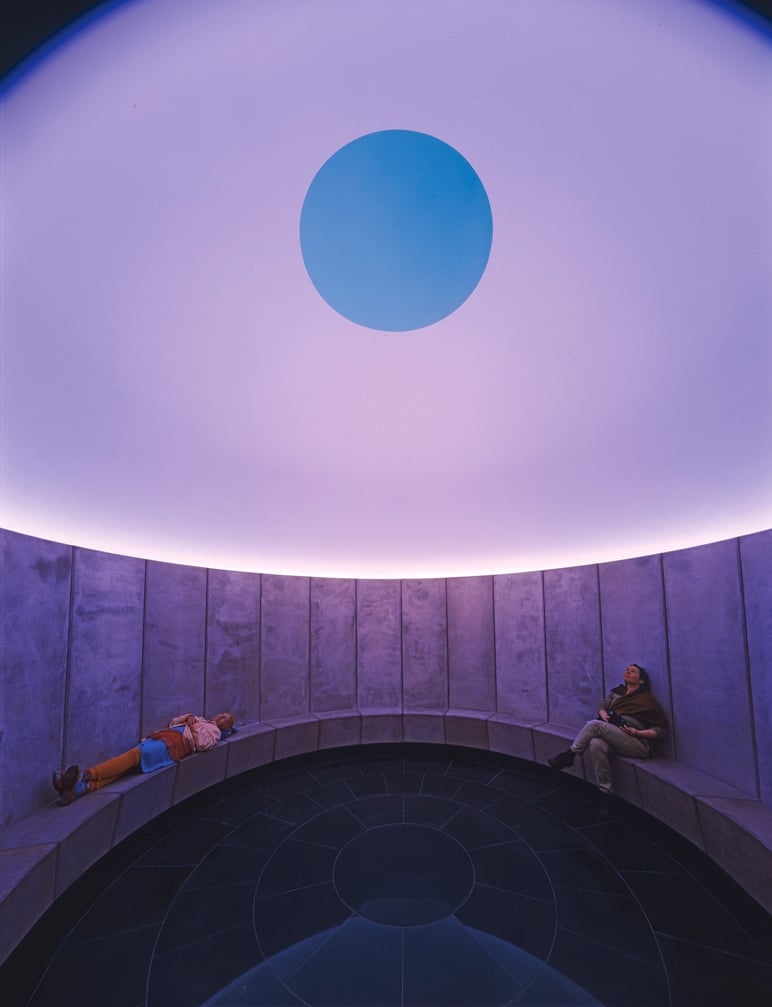
Inside Skyspace-Lech. Photo
courtesy Getty Images.
WHERE TO EAT:
Restaurant Klösterle, which features high-concept Alpine cuisine in
a perfect, chalet-style setting full of warmth and
hospitality.
WHERE TO SHOP:
Sagmeister, the town’s most upscale fashion-and-design boutique;
and Strolz, a haven for stylish skiers, offering mountain gear and
custom leather ski boots.
OTHER ART TO
SEE: Try to spot the 100 Antony Gormley sculptures of
life-sized human figures, installed in the mountains above Lech.
Then head to the Hotel Kristiania in town, which houses an
impressive art collection in its common areas, including a
Lichtenstein, among other notable names. If you choose to spend the
night, you can ask the staff to move one of the artworks into your
room for the duration of your trip.
FUN FACT: As
with most Turrell installations, Skyspace-Lech will appear
totally different as the light outside shifts.
Fondation Maeght
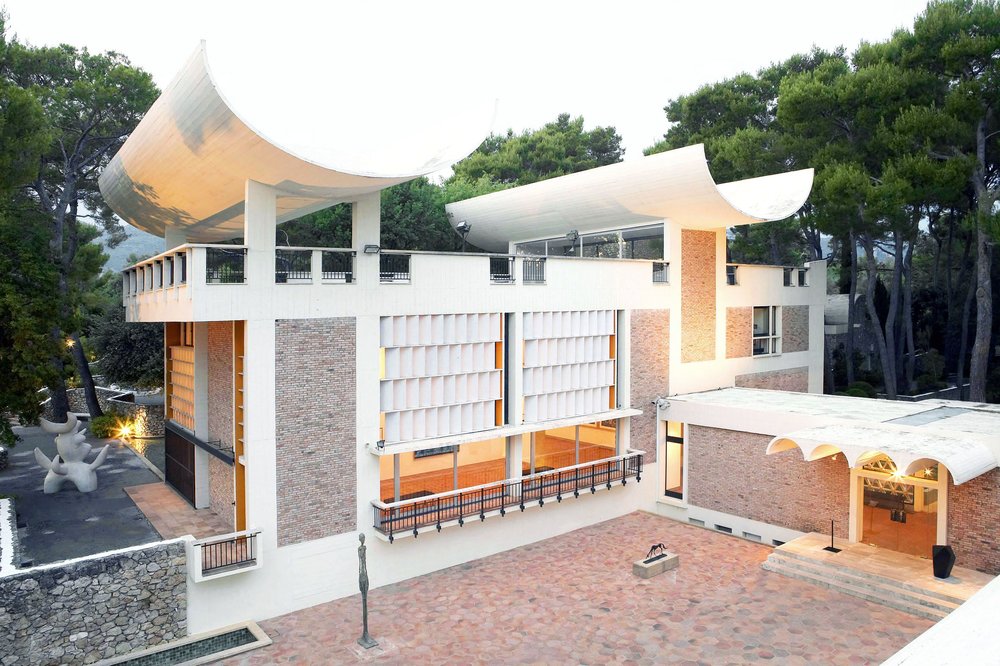
Fondation Maeght. Photo courtesy Getty
Images.
WHAT IT IS: A
museum of modern art created by the French publishers and art
dealers Marguerite and Aimé Maeght, perched on a hill
overlooking the medieval town of Saint-Paul de Vence on the French
Riviera. Together, the Maeghts maintained working and personal
relationships with some of the most noteworthy artists of the
20th century, including Alberto Giacometti,
Alexander Calder, Marc Chagall, and Joan Miró, among others.
Modeled after American institutions such as the Guggenheim and the
Barnes Collection, Foundation Maeght was France’s first private art
institution. Catalonian architect Josep Lluis Sert designed the
space in such a way that many of the works are integrated into the
building itself and its surrounding grounds.
WHERE IT IS:
Saint-Paul de Vence, France, a small medieval town tucked in the
hills of the French Riviera
WHERE TO STAY:
Grand-Hotel du Cap-Ferrat, one of the South of France’s crown
jewels. The hotel sits on the top of the Cap-Ferrat peninsula
overlooking the Mediterranean Sea.
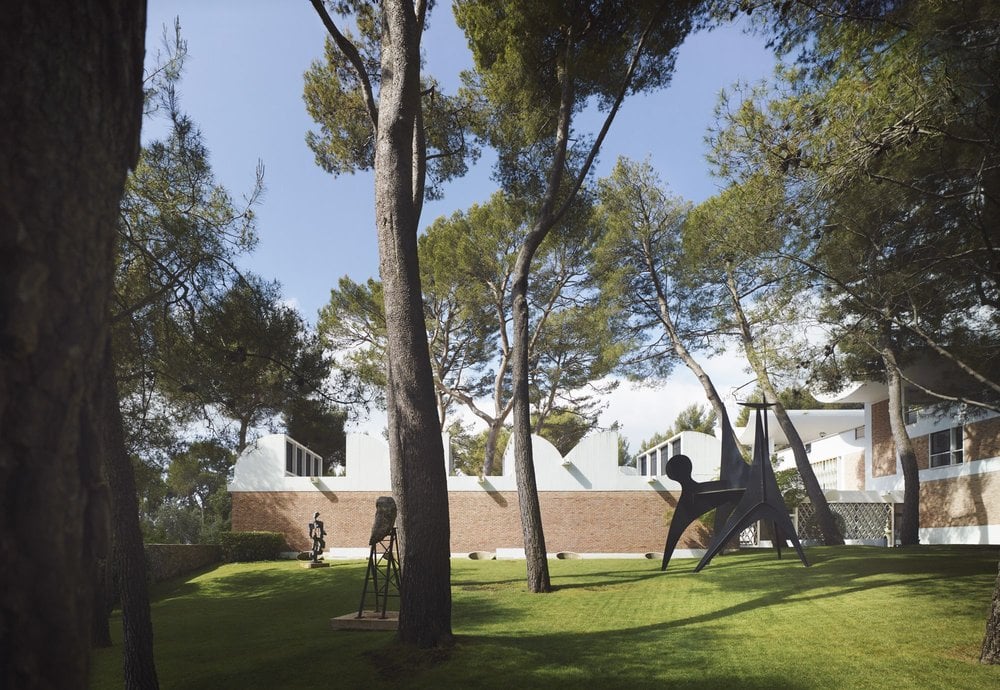
Outdoor artworks at Fondation Maeght.
Photo courtesy Getty Images.
WHERE TO EAT:
La Villa Archange, a charming two-Michelin-star venue created by
Chef Bruno Olger in a secluded 18th-century residence, away from the hustle and
bustle of Cannes. Featuring outdoor seating surrounded by lush
gardens, the restaurant offers classic cuisine from the South of
France.
WHERE TO SHOP:
La Croisette, the iconic Cannes-set promenade lined with chic,
high-end shops.
OTHER ART TO
SEE: The Marc Chagall National Museum, the Musée
Picasso, and Villa Ephrussi de Rothschild.
FUN FACT:
Between 1961 and 1981, Joan Miró created
his Labyrinth for the Maeghts, an outdoor work
comprised of 140 sculptures. Pro trip: take a stroll through the
gardens of the foundation, where more outdoor works can be
discovered.
Castello di Rivoli—Museo d’Arte Contemporanea
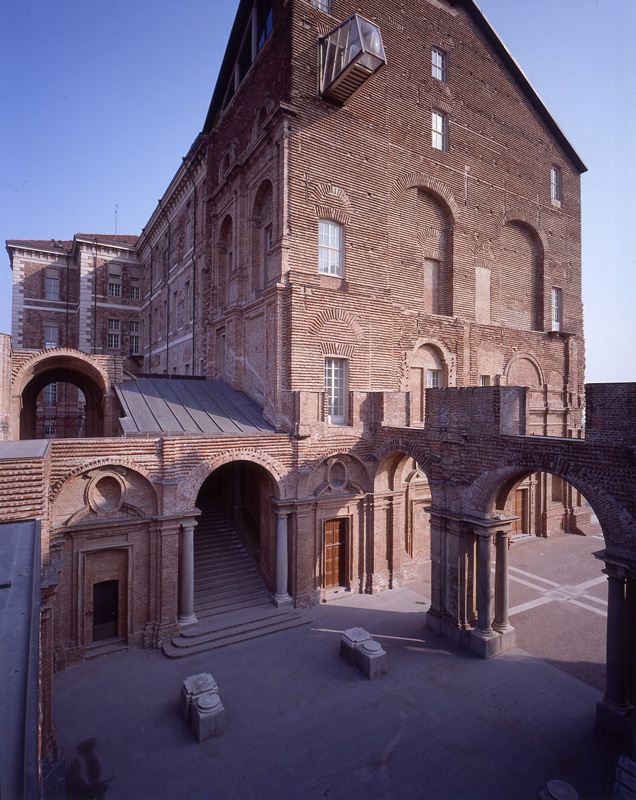
Castello di Rivoli—Museo d’Arte
Contemporanea. Photo courtesy Castello di Rivoli.
WHAT IT IS: A
contemporary art museum housed in a former royal residence whose
founding date goes too far back to pinpoint precisely, Castello di
Rivoli sits on a hill at the gates of Turin. With a focus on art
created in the second half of the 20th century, from Italy and abroad, the collection
documents many crucial moments in the development of contemporary
culture. The juxtaposition of the building’s rich and varied
history with its innovative programming yields a remarkable
blending of the past, present, and future. Upon its creation in
1984, the museum stood as the first devoted to contemporary art in
Italy. If all of this isn’t enough to get you there, perhaps
Maurizio Cattelan’s notorious embalmed horse suspended from the
ceiling, Novecento, will seal the
deal.
WHERE IT IS:
Turin, the cultural center of northern Italy, renowned for its
refined art offerings, architecture, and cuisine.
WHERE TO STAY:
Turin Palace Hotel, an airy, elegant boutique hotel that’s housed
inside a historic building constructed in 1870. The property boasts
a terrific spa, gastronomy-focused restaurant, and rooms
overlooking courtyard gardens.
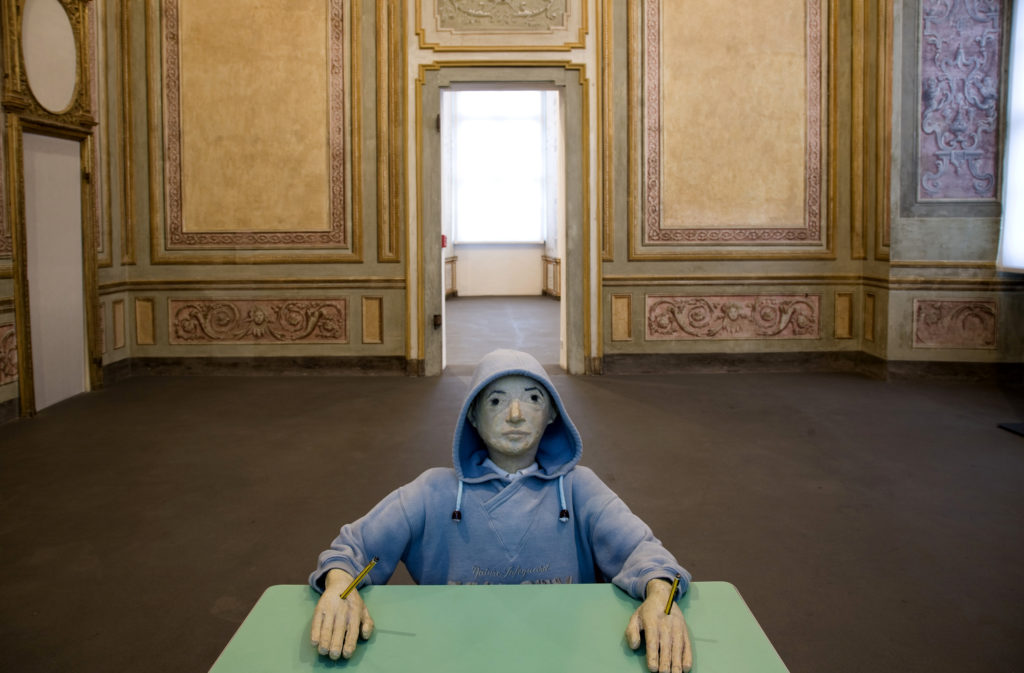
Inside the Castello di Rivoli. Photo
courtesy the Castelli di Rivoli.
WHERE TO EAT:
Cannavacciuolo Bistrot, a recently named Michelin-star destination
where chef Chef Antonino Cannavacciuolo fuses local delicacies with
a creative flair.
WHERE TO SHOP:
Via Roma and San Carlo Dal 1973, two of Turin’s most famed
destinations for fashionable finds.
OTHER ART TO
SEE: Palazzo Madama and Fondazione Sandretto Re
Rebaudengo.
FUN
FACT: Louis XIV’s architects from Versailles were
tapped for their expertise during one of Castello di Rivoli’s many
renovations.
Kielder Art & Architecture
and Forest Park
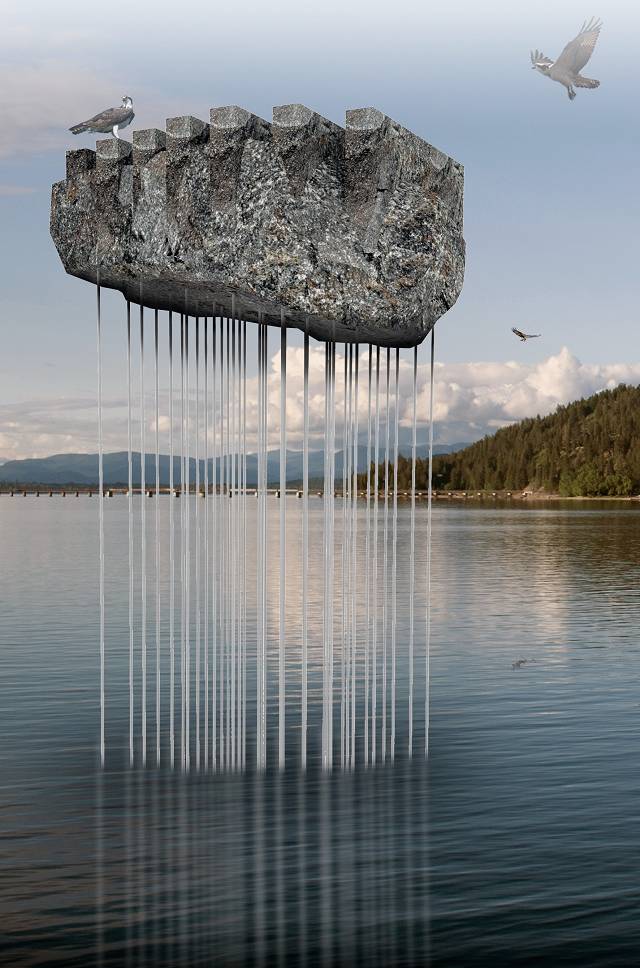
A new installation at Kielder Art &
Architecture. Photo courtesy Getty Images.
WHAT IT IS:
Kielder Art and Architecture offers an open-air art experience
across the sprawling Northumberland National Park in northern
England. For over 25 years, the park has housed an astounding
collection of visual art and architecture, including work by many
globally recognized names such as James Turrell, Chris Drury,
Silvas Capitalis, SIMPARCH, and Tania Kovats. With more than 20
installations across the park, you can easily spend an entire day
roaming the expansive landscape. The Art & Architecture program at
Kielder Water and Forest Park is carefully curated to fit in with
its unique backdrop and overseen by artists Fiona Curran and Peter
Sharpe.
WHERE IT IS:
Northumberland, the northernmost county in England.
WHERE TO STAY:
Maften Hall, a 19th-century country mansion set upon a sprawling
estate and golf course.
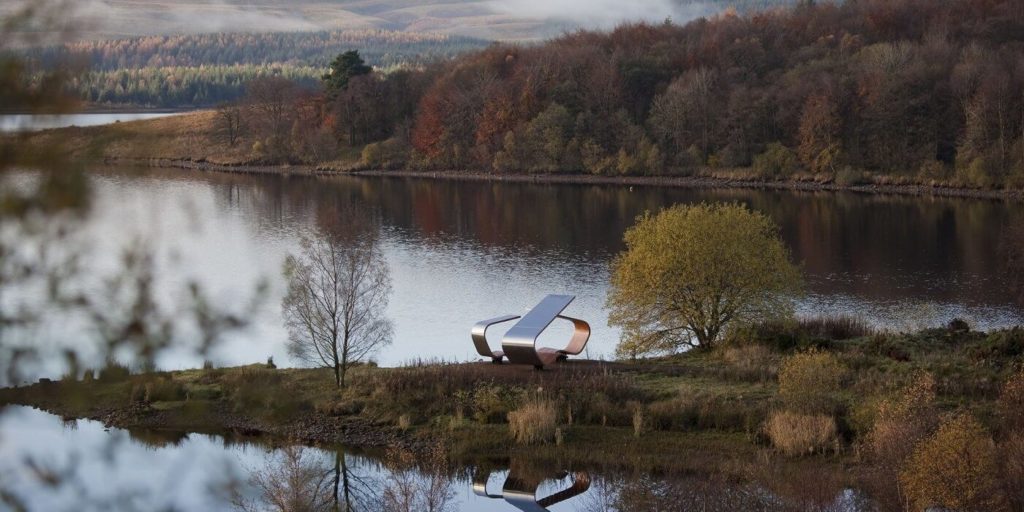
A view of Kielder Forest Park. Photo
courtesy Kielder Art & Architecture.
WHERE TO EAT:
House of Tides, a family-run restaurant offering locally sourced
and sustainable gourmet British cuisine, that has received a
Michelin star rating each year since its opening.
WHERE TO SHOP:
Northumberland Street, the main shopping street in the nearby city
of Newcastle upon Tyne (and the most expensive location in the UK
outside of London).
OTHER ART TO
SEE: Jupiter Artland, the Bowes Museum, and the Tullie
House Museum and Art Gallery.
Pavillon Le Corbusier
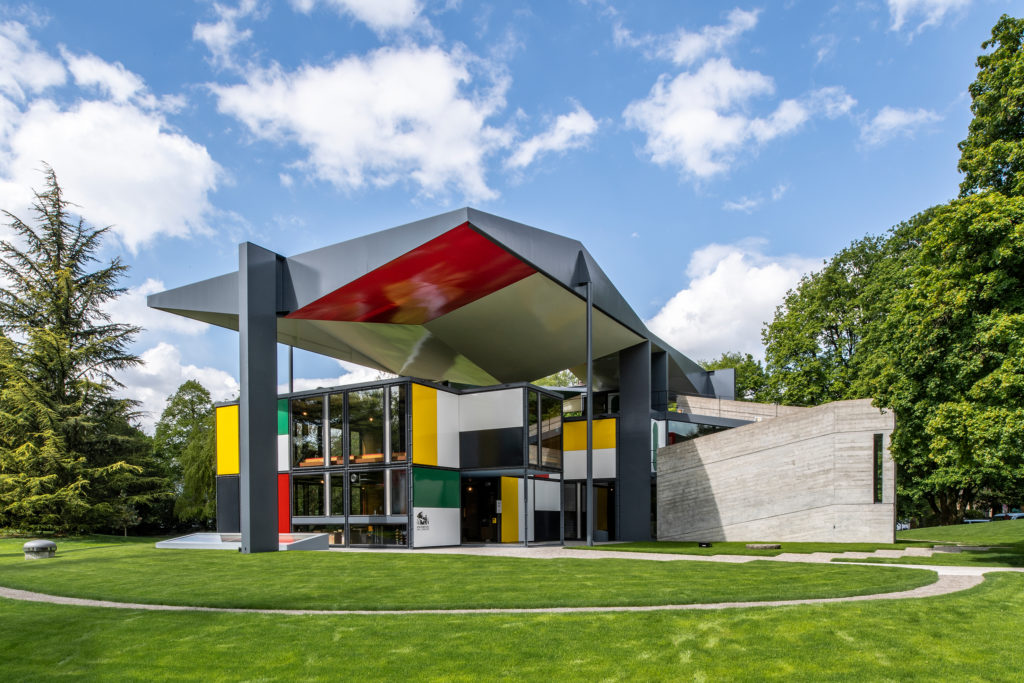
Pavillon le Corbusier. Photo courtesy
Pavillion le Corbusier.
WHAT IT IS: The
last realized project by renowned Swiss-French architect Le
Corbusier, Pavillon Le Corbusier was inaugurated in 1967, two years
after the master’s death; it was designed to be “a synthesis of the arts.” A
reflection of key modernist principles, the Pavillon’s initial
purpose was to showcase art, though over time it has become a
destination for a wider audience of architecture and design lovers
as well. Made entirely of glass and steel, the structure sits below
a free-floating roof affixed to pillars. Throughout, the building
sticks to an eye-catching use of red, green, black, blue, yellow,
and white. An example of Le Corbusier’s genius in fields extending
beyond just architecture, the Pavillon reflects the artist’s union
of sculpture, painting, furniture design, and
writing.
WHERE IT IS:
Zurich, Switzerland, along the Zürichsee lake
shore.
WHERE TO STAY:
The Dolder Grand, an award-winning landmark set just above Zurich
and offering views of the Alps and Lake Zurich.
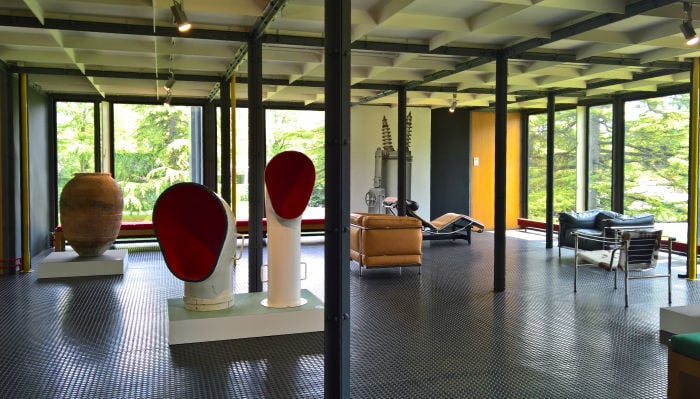
Objects by Le Corbusier. Photo courtesy
Pavillion le Corbusier.
WHERE TO EAT:
Pavillon at the Baur Au Lac Hotel, the restaurant of famed chef
Chef Laurent Eperon. The restaurant sits inside a stunning gazebo
designed by Pierre-Yves Rochon.
WHERE TO SHOP:
Along the Bahnhofstrasse, touted as one of the world’s most elite
shopping avenues.
OTHER ART TO
SEE: Hauser & Wirth, Galerie Eva Presenhuber, and Galerie
Mark Müller.
FUN FACT:
Pavillon Le Corbusier reopened in summer 2019 after significant
renovations by architects Silvio Schmed and Arthur
Rüegg.
Foundation Beyeler
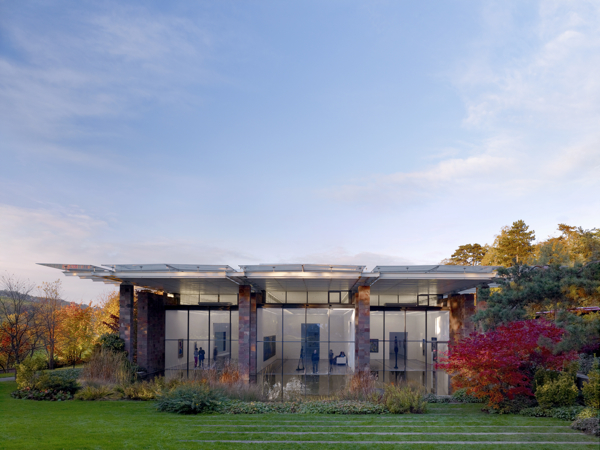
Foundation Beyeler. Photo by Foundation
Beyeler
WHAT IT IS: A
Renzo Piano-designed building which fits seamlessly into the
stunning natural setting in which it sits, Foundation Beyeler was
created to house the collection of art dealers Hildy and Ernst
Beyeler. The intrigue of the visiting experience lies inside the
museum walls and extends out onto the highly curated grounds. The
Beyeler’s collection features a Who’s Who of work from notable
masters of the 19th,
20th, and 21st centuries, showcasing artists as diverse as
Edgar Degas, Francis Bacon, and Jeff Koons. An all-encompassing,
multi-sensory experience, Foundation Beyeler is a harmonious
combination of exceptional art, architecture, and
nature.
WHERE IT IS:
Basel, Switzerland, one of the art world’s annual focal points for
its eponymous international art fair.
WHERE TO STAY:
Grand Hotel Les Trois Rois, an opulent space with a rich history in
the heart of Basel’s Old Town, along the banks of the
Rhine.
WHERE TO EAT:
Cheval Blanc, the three-Michelin-star standout from chef Peter
Knogl.
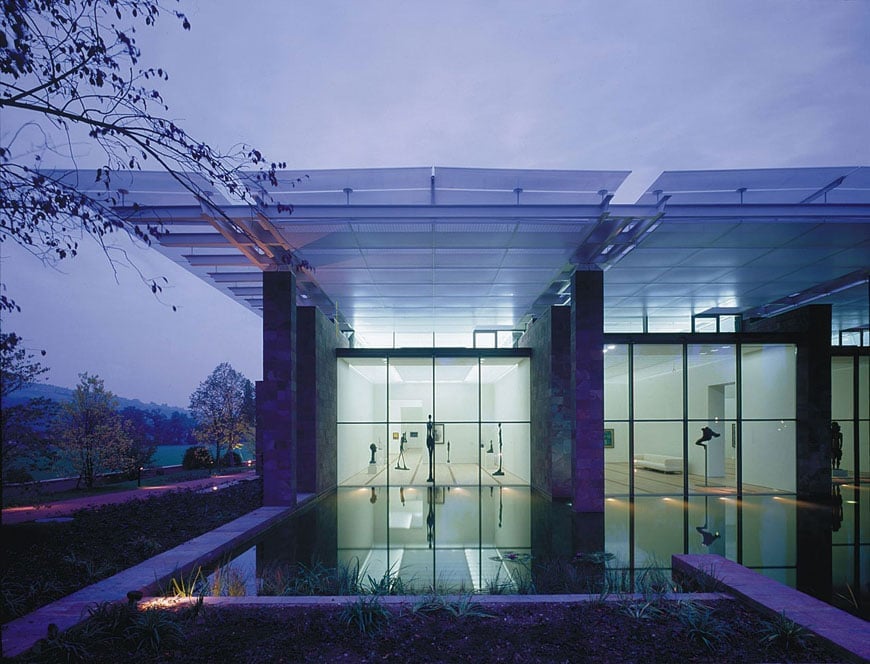
Fondation Beyeler in the evening. Photo
courtesy Fondation Beyeler.
WHERE TO SHOP:
Along Freie Strasse, the often traffic-free street where you will
find a plethora of lavish design shops.
OTHER ART TO
SEE: Gagosian, Kunsthalle Basel, and Kunsthaus
Baselland.
FUN FACT: Early
in their careers, Ernst and Hildy Beyeler owned an antique bookshop
in Basel which they named “Galerie Beyeler.”
The post Six Spectacular Art Sites in Europe for the Luxury
Traveler appeared first on artnet News.
Read more https://news.artnet.com/art-world/spectacular-art-journeys-in-europe-for-the-luxury-traveler-1788129
Further reading


Leave a comment