
‘Be Ready to Be a Warrior’: Dealer Kate Shin and Artist Sun K. Kwak on Carving Out Their Place in the Art World
“From One Woman to Another,” a
five-part series co-produced by artnet News and Mark Cross,
features intimate, candid conversations between eminent women at
the pinnacle of the art industry and a mentor or protégé of their
choosing, paired with original photography by David
Lipman.
In the fourth installment of the
series, artnet News contributor Maria Vogel interviewed art dealer
Kate Shin and her protégé, the artist Sun K. Kwak.
The relationship between Kate Shin
and the Korean artist Sun K. Kwak—who is best known for her “Space
Drawing” installations made from black masking tape—exists on many
planes, but it is grounded in a shared sense of
spirituality.
When Shin, a former finance guru and
real estate developer, undertook renovations of the Waterfall
Mansion, a luxurious art gallery and private-events venue on New
York’s Upper East Side, she felt it was necessary to involve
artists in meaningful, long-term ways. After launching an artist
residency program as part of the project, she developed an
especially close relationship with Kwak, and the two bonded over
their similar outlooks on life.
We sat down with Shin and Kwak to
discuss how they each fell into the art world, the nature of their
friendship, and how they find inspiration for their creative
lives.
Tell me a bit about your
backgrounds.
Kate Shin: When I was a
little girl, I was an opera singer. I was always drawn to music,
but I didn’t know how to switch the artistry on and off. Being
fully emotional and exercising my feelings all the way—that’s what
I was drawn to, perhaps overly so. I struggled with being practical
and focusing on things like getting my homework done on time.
Eventually, I learned that always freely expressing my emotions and
feelings wasn’t something I should do, because it prohibited me
from getting things done. And when I entered a pre-Julliard junior
high school, everyone was so competitive.
That was my first interaction with
the creative arts. I think I was born to be sensitive to something
intangible. From there, I went into the finance world for a while.
It was something I felt I could be practical, strong, and
successful in.
Now, through the Waterfall Mansion,
I’ve been able to reconnect with art. After beginning to speak with
artists, I felt a sense of belonging. I truly fell in love with art
when I connected my heart to the hearts of artists. Their emotions
and my feelings are connected. I love seeing the process of how
they break through, how they mature, and how they fall down. It’s
almost like I’m a mother or teacher looking at their
art.
Sun K. Kwak: I have a similar
childhood background to Kate’s. My mom’s dream was for me to be a
pianist. I started playing at age three, and I enjoyed it. That
lasted until I was 13. But ever since I was a child, I also had a
passion for drawing and painting.
Before entering college, and without
permission from my parents, I went and met a teacher at a painting
atelier. After that, I persuaded my parents to let me continue with
my art education. It was difficult at first, because they had
invested so much into my music career. After I entered college, I
was happy to be able to focus on my painting all the time. I was
always either in my studio or in the library reading artists’
books. I came to the United States in 1993 to continue my career,
which created more conflict with my parents.
And when did you meet each
other?
Shin: We first met in 2012 or
2013 after I opened the Waterfall Mansion for the first time. I
hadn’t even decided at that point to keep the space for myself. My
intent was to invest in it and sell it.
When Sun first met me, she probably
thought of me as someone who only thinks about money. We met again
a couple years later, at a Korean art gala, where we were seated at
the same table. In this setting, I think Sun was able to see me
differently, and we were able to talk more casually.
After first approaching her to be in
an exhibition, it took a few years before the timing worked out. It
was never about me bringing her work to Waterfall Mansion just to
show it. It was about beginning the whole process of getting to
know the work that I was going to be bringing into the space.
Getting to know Sun confirmed a lot of the feelings I had about my
intuition. The transparency and honesty with which I deal with
artists, I think, helped Sun to open her own heart. Sun needs to
feel a spiritual confirmation to show her work, which I also share.
There was a natural fit.
Kwak: Yes, it’s not easy for
me to open my mind right away, because, with my work, I’m not
following economic opportunity. I would rather see the value of the
person and decide for myself if it’s worth it to work together.
Once I trust them, it’s a lifetime relationship and friendship. I
didn’t want to rush it, which is why it was many years after
meeting that we first worked together. Kate didn’t push
me.
When I started to trust Kate, I
started to witness the care that she puts into everything: her
plants, her animals, her art. I began to open my mind to her true
value and sincerity, which translates into how she handles artwork.
From the moment it is being installed onward, Kate lives with the
work. When I saw that, that was the confirmation I needed to know I
could trust this person and work together.
You have both taken
nontraditional strides in your careers. Do you feel that this
commonality contributed to your understanding of one
another?
Shin: Sure. We have a very
similar perspective in that we seek values that cannot always be
tangible or seen. We share an intuitive personality, one in which
we don’t have to explain ourselves. We never have disputes, because
we seek the same outcomes—which I think is rare. It’s not something
you can learn; you just have to be likeminded.
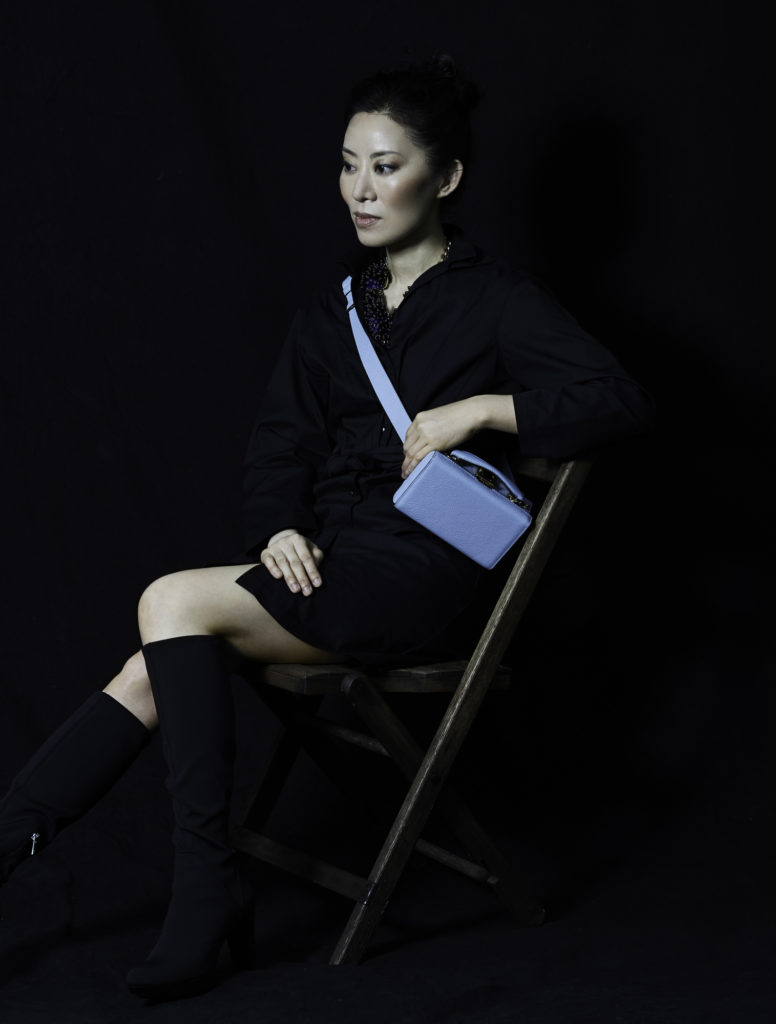
Sun K. Kwak. Photo by David Lipman.
Who or what inspires
you?
Shin: I love seeing artists
transform the mindset of scarcity into abundance. It’s not that we
have everything. But I tell them, “Let’s assume we have all the
resources you need. How would you do this?” And they just
fly.
When I see that, the work comes
right away. That motivates and inspires me. I invest in someone
else’s life; it’s not really about art. My job is to provide the
platform that allows them to communicate their stories, and to help
them turn their creativity into some kind of language that does not
get lost in translation.
Kwak: Because I went against
my parents’ will when I came to the US, I had to find a strong
reason why this was what I was meant to be doing. When I was asked
to create a large-scale installation at the Bronx Museum, I began
asking myself: What’s my value? What’s the value of my art? What’s
my role in society? Somehow during the exhibition, I got all the
answers I needed. It became obvious to me what art could give to
society. It is something that you cannot buy with money. I never
questioned myself after that.
What advice would you give young
women who are hoping to have careers in the art
industry?
Shin: When most people work
with living artists, they try to quantify their lives, which
diminishes the potential that those artists have. There should be a
greater focus on investing in the process and journey of an artist.
It’s okay to move slowly—art needs to be slow. You are dealing with
real life. In this world, everything is transactional, everything
is about results, everything is about what’s next. We often neglect
the importance of process, and that kills art.
Kwak: When a younger artist
approaches me and asks me this question, I tell them to reflect
themselves in their work. It might seem cool to be an artist, but
the reality is not always friendly, so I tell them to find their
true motivation, what drives them, their passions. You have to
really examine and test yourself in every way to make sure you
truly love this and have a reason to go on this journey. You have
to be ready to be a warrior—to have a love for art on the one hand,
but to be a warrior and fight for it on the other. Most younger
artists are scared when they hear this, but I tell them that if
it’s your true passion, it’s a blessing, because it can be a
blessing for others as well.
What are you both working on
now?
Shin: I’ve started the
Waterfall Arts Foundation, which is focused on encouraging artists
across all disciplines to work together. I want to use creative
capital to have artists from different fields collaborate and help
each other. The art world is so categorized, but when you focus on
the human aspect of creativity, there is so much more potential to
be unlocked, and you can bring that creative power
together.
Sun has been doing “Space Drawings”
using masking tape, where she spends days getting to know a space.
But the installation gets demolished after a show, and a lot of
people wanted a way to collect Sun’s work. A collector suggested
that she start translating the masking-tape works into paintings.
Instead of going bigger, we are now going smaller. Waterfall is
like that for me. I was once used to working with hundreds of
people, and now I’m here doing all the work myself. It’s where I
feel I’ve found myself.
Kwak: This wasn’t the first
time I was asked to make something like this, but it was the first
time I began to think of the “Space Drawings” in different ways,
using different material. This is the beginning of a new moment for
me. I’m not sure how many two-dimensional works and canvases I’ll
create, but as long as it inspires me, I’ll
continue.
What changes do you hope to see
in the art industry 10 to 15 years from now?
Shin: As an analyst, I always
look for benchmarks and statistics. When I first started Waterfall
Mansion, I realized that most galleries do not have a sustainable
model. Galleries are closing almost every day. In 10 years,
something has to change—and I think it’s already
changing.
Everything seems confused and lost
in the art world, which affects the artists as well. We need to
find sustainability for the middle-market galleries that are
finding the artists of the future. But when galleries do not have
their own clear vision and focus, there is no hope. That’s sad
because it will affect the creative output of artists. For this
reason, I’m always thinking about how we can monetize the value of
living artists beyond just selling their work. It’s a very
important question. It’s a paradigm shift that I’m starting, and
hopefully in 10 years, it will have grown.
Kwak: I’ve always gone my own
way and not thought about how the art world should be shaped. But
in today’s world, the market doesn’t make things easy for artists,
and that needs to change. My role is to continue to be a true
artist—and true to myself.
Photographer: David Lipman Art Director: Yulu Serao Stylist: Melena
Lipman Hair Stylist: Rudy Martins Makeup: Tina Bech
Further reading


Leave a comment